High Mast Lighting Distribution: Engineering the Perfect Beam Angle
"Illuminating massive infrastructures like container ports and airport aprons requires more than raw power—it demands precision distribution. Selecting the correct beam angle for a 30-meter high mast prevents dangerous 'hot spots' and blinding glare, ensuring total project safety and maximized energy ROI."
Optical Classification Standards
To master high mast illumination, engineers must leverage two primary systems: NEMA Beam Classifications for floodlighting (defining the spread at 10% maximum intensity) and IESNA Distribution Types (describing how light reaches the ground plane). Precision optics allow us to 'shape' the light, ensuring photons reach the target without sky-glow or bleed.
Fig 1.0 - Photometric Pattern Visualization: Type III vs Type V
IESNA Ground Patterns
Type III: Asymmetric distribution pushing light forward and sideways. Ideal for perimeters and multi-lane highways.
Type V: The "Gold Standard" 360° symmetrical circular/square pattern. Engineered for central placement in industrial yards.
Technical Matrix: NEMA Beam Classifications
NEMA Type
Classification
Angle Range
Ideal Application
Type 2
Narrow Flood
18° to 29°
Flagpoles, monuments, extreme far setbacks.
Type 3/4
Medium Flood
29° to 70°
Building facades, signage, medium-range setbacks.
Type 5/6
Wide Flood
70° to 130°
General area lighting, large parking lots, public parks.
Strategic Deployment Blueprint
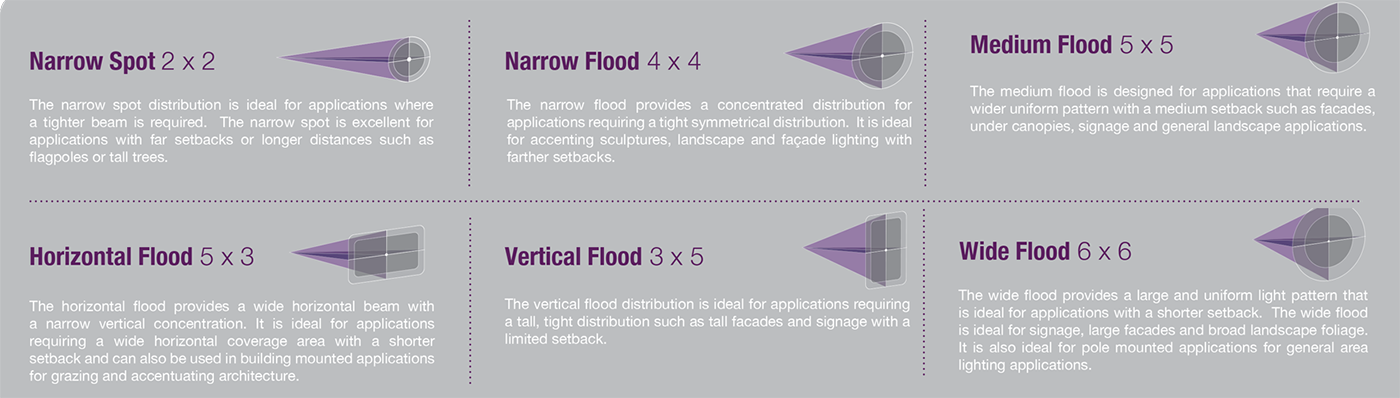
Narrow Spot (2x2)
Designed for extreme distances. Ensures photons reach the target without light pollution or sky-bleed, perfect for high-altitude monuments.
Asymmetric (5x3)
Shapes the beam specifically for Rectangular Areas. Vertical flood for tall structures, Horizontal for grazing long perimeter walls.
Wide Uniformity (6x6)
Provides a uniform pattern from 15m to 30m heights. Reduces pole count while covering expansive plazas and sports arenas.
HI-3000 Series: Engineering Excellence
Luminous Efficacy180lm/W
Maximizing energy savings across massive grids.
Mounting Height15m - 30m
Standardized heights for municipal infrastructure.
Choosing the right beam angle is a science. Our engineering team provides Free DIALux simulations to visualize uniformity and lux levels before purchase.
E-Able Solar is a prominent Chinese manufacturer of solar lighting and commercial energy storage systems, offering All-in-One and All-in-Two solar street lights, Split solar street lights, Solar Garden Lights, and C&I to utility-scale LiFePO4 energy storage solutions (50kW to 1MW+).
+86-15355589600 sales@e-ablepower.com Building C, Huiheng Industrial Park, No. 3 Fenghuang West Road, Shajiao, Humen Town, Dongguan City, Guangdong Province