Applications
All-in-one lights earn their keep where trenching is not an option.
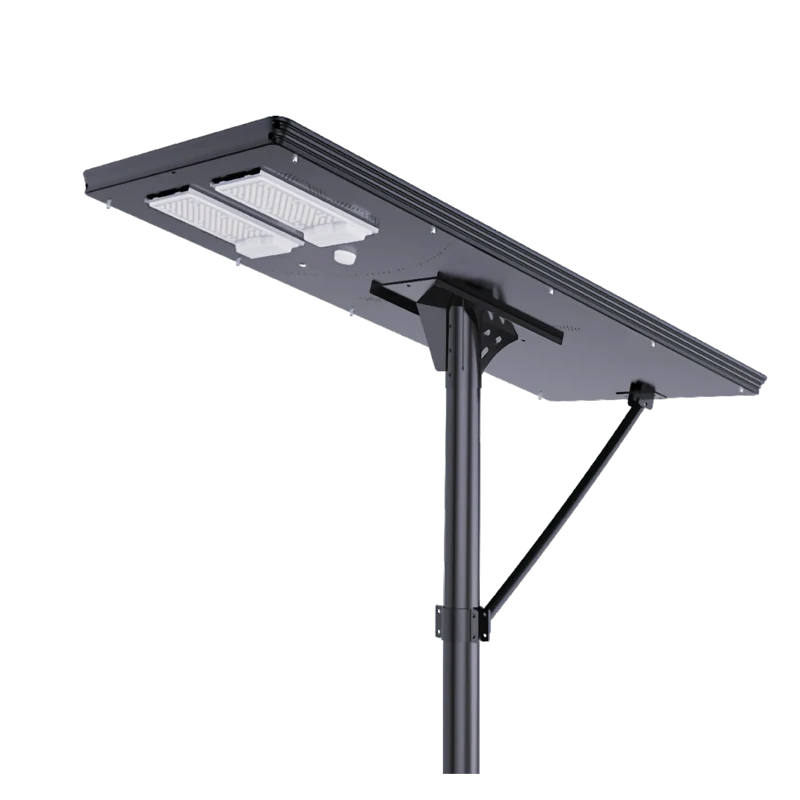
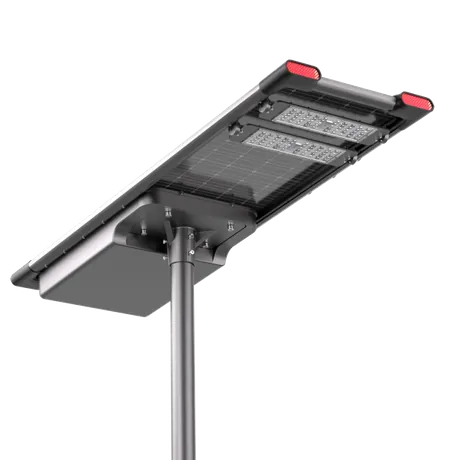
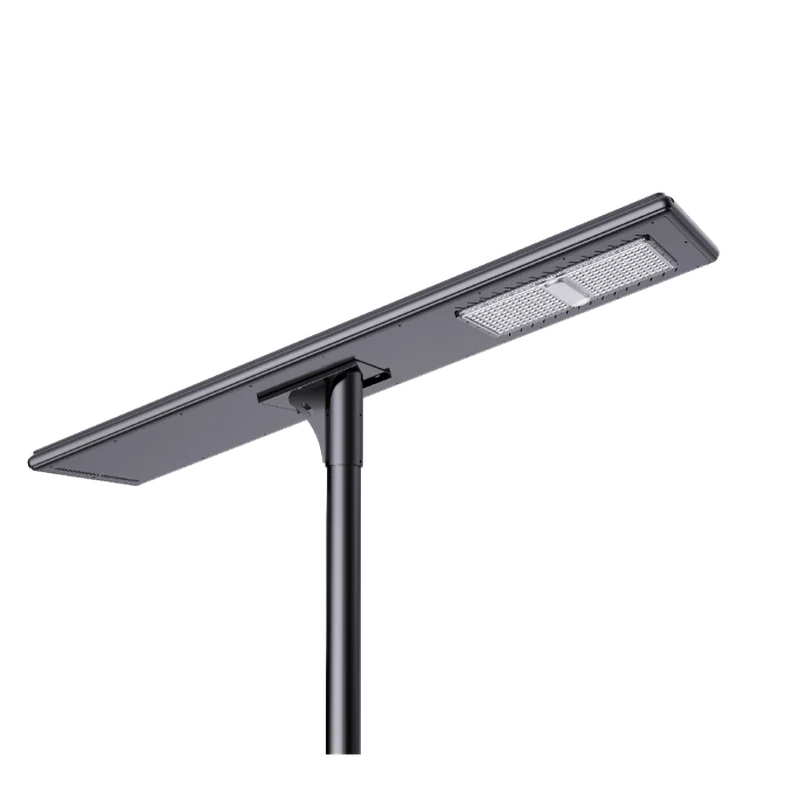
A self-contained fixture carries its own panel, battery and controller on the pole, so the only civil work is the foundation. That is why these lights are specified for municipal roads and rural access routes where grid connection is expensive, slow or simply unavailable, and for industrial yards, campus paths, car parks and port or mining sites that are re-laid or relocated every few years.
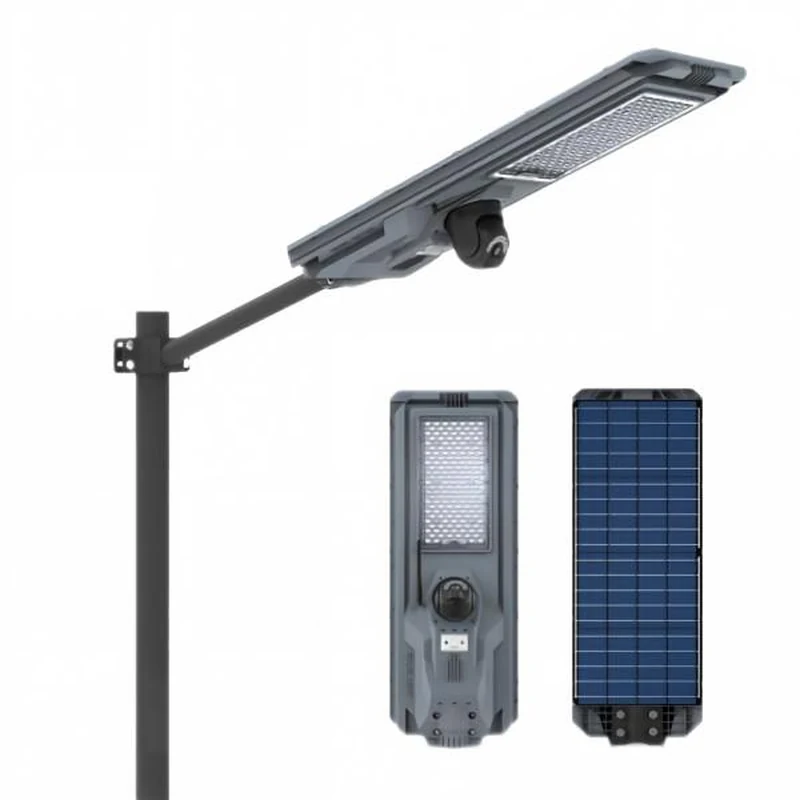
Match the model to the surface rather than to the wattage. The 40W–100W models (6,000–15,000 lm) suit footpaths, internal estate roads and car parks where poles sit 5–8 m apart. The 160W–260W models (20,000–30,000 lm) are specified for collector roads and arterial links where the pole spacing widens and the lit width grows. The CCTV variant is for sites that already need camera coverage and would otherwise run a second power feed to the camera.
Installation
One pole, one anchor cage, no trenching.
Installation is a foundation, a pole and a fixture. The anchor cage is cast into the foundation, the pole is levelled and torqued, and the light is lifted onto the spigot and locked. There is no cable to pull, no cabinet to house and no meter to connect, which is usually what makes the payback work on remote sites.
Three details decide whether the install holds up. The foundation must be sized for the local wind load and soil, not copied from a neighbouring project. The panel must face the equator with enough tilt to shed dust and snow. And the commissioning profile — output level, dimming schedule, motion sensor behaviour — has to be set at handover, otherwise the light runs at full output and the autonomy you paid for disappears in the first cloudy week.
What is an all-in-one solar street light?
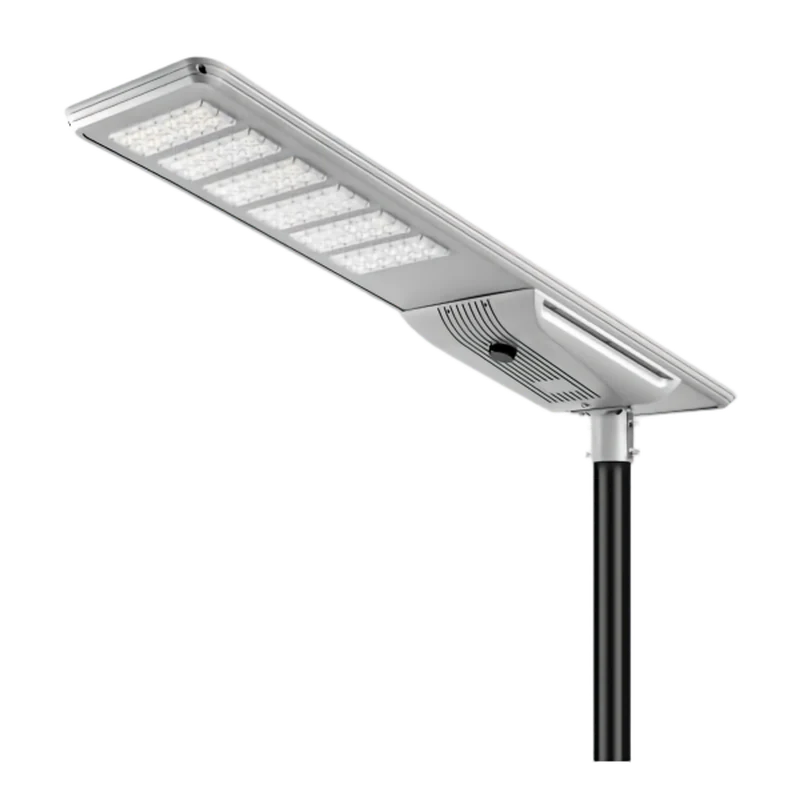
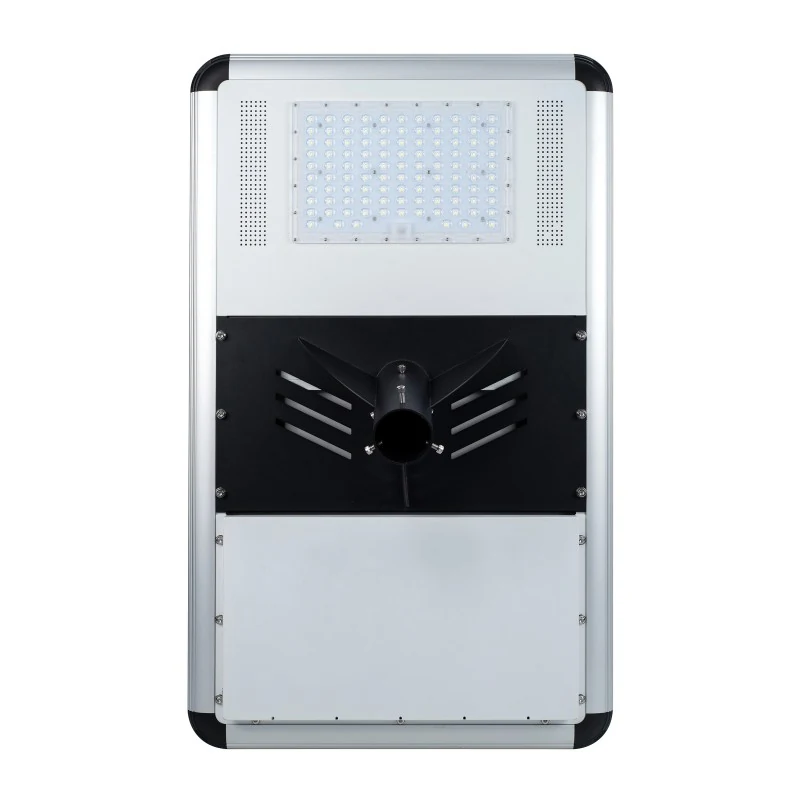
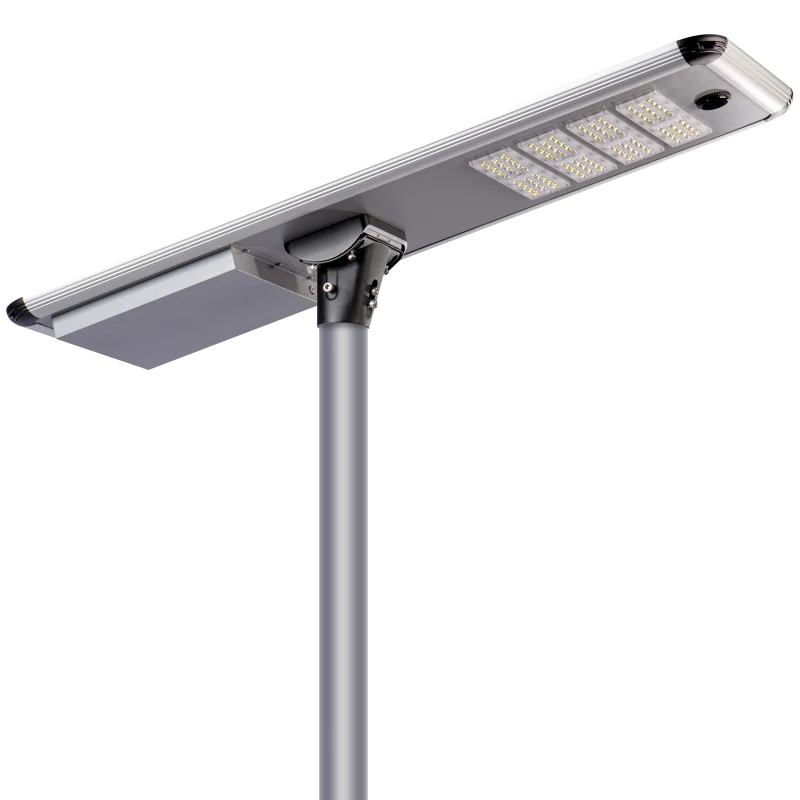
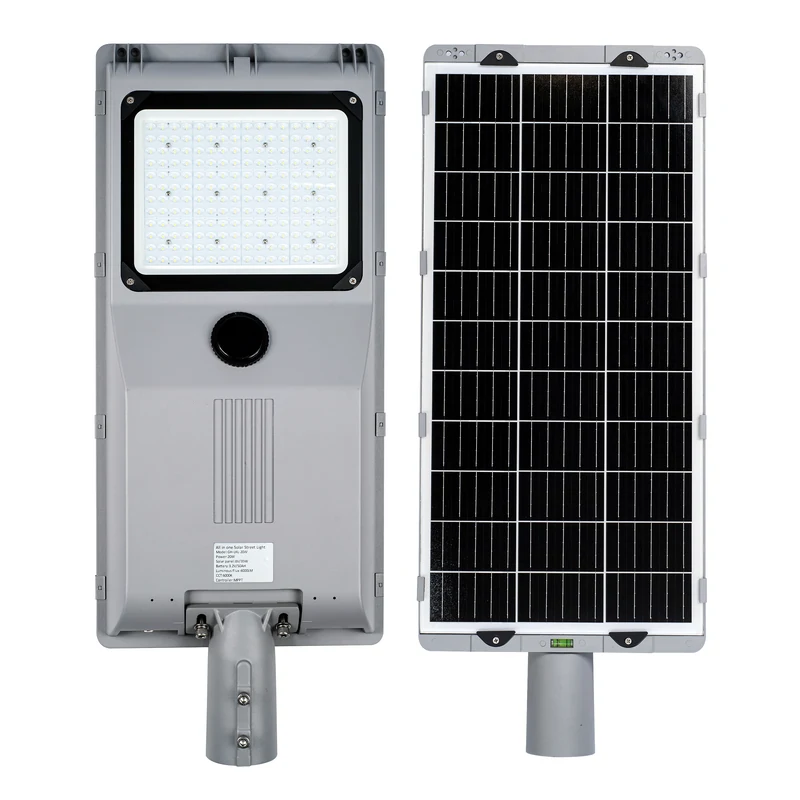
An all-in-one solar street light integrates the solar panel, LiFePO4 battery, LED luminaire, MPPT controller and smart sensor into a single pole-top unit. There is no separate battery box or exposed wiring, so installation is fast, factory-tested and vandal- and weather-resistant. E-Able Power supplies these factory-direct, project-configured systems for municipal roads, highways, car parks and off-grid sites.
How does an all-in-one solar street light work?
During the day the integrated solar panel charges the LiFePO4 battery through an MPPT charge controller. At dusk the controller switches the LED luminaire on at the programmed brightness, using motion, dimming or timed profiles to save energy, and autonomously runs dusk-to-dawn across several consecutive no-sun days before recharging.
Where are all-in-one solar street lights best used?
They suit areas where grid connection is expensive or unavailable: rural roads, village streets, car parks, warehouse yards, campuses, industrial parks and off-grid projects. With mounting heights around 6–12 m and integrated security or CCTV-ready poles, they are also used for monitored smart-city and remote roads.
What battery and controller does an all-in-one light use?
E-Able Power all-in-one models use Grade A LiFePO4 cells charged by an MPPT controller for high charging efficiency and long cycle life. Battery autonomy is sized per site from about 2 up to 5+ rainy days in overcast conditions, and most systems are rated IP66 with an optional 4G/WiFi, motion and light-sensing platform.
Are all-in-one solar street lights weather-resistant?
Yes. The sealed single-unit build is rated IP66 with corrosion-resistant aluminium housings, ready for rain, dust, salt air and UV exposure. This removes the external battery box that can leak or corrode on split systems, cutting maintenance and replacement cost over the product lifetime.
Can E-Able Power customise an all-in-one solar street light for my project?
Yes. E-Able Power configures each all-in-one system factory-direct around your site: pole height, wattage and lumen output, CCT, battery autonomy, motion or dimming control, CCTV and OEM/ODM branding, with sizing and pricing supplied within 2–3 business days.