E-ABLE POWER / SOLAR LIGHTING

All-in-TwoSolar Street Lights

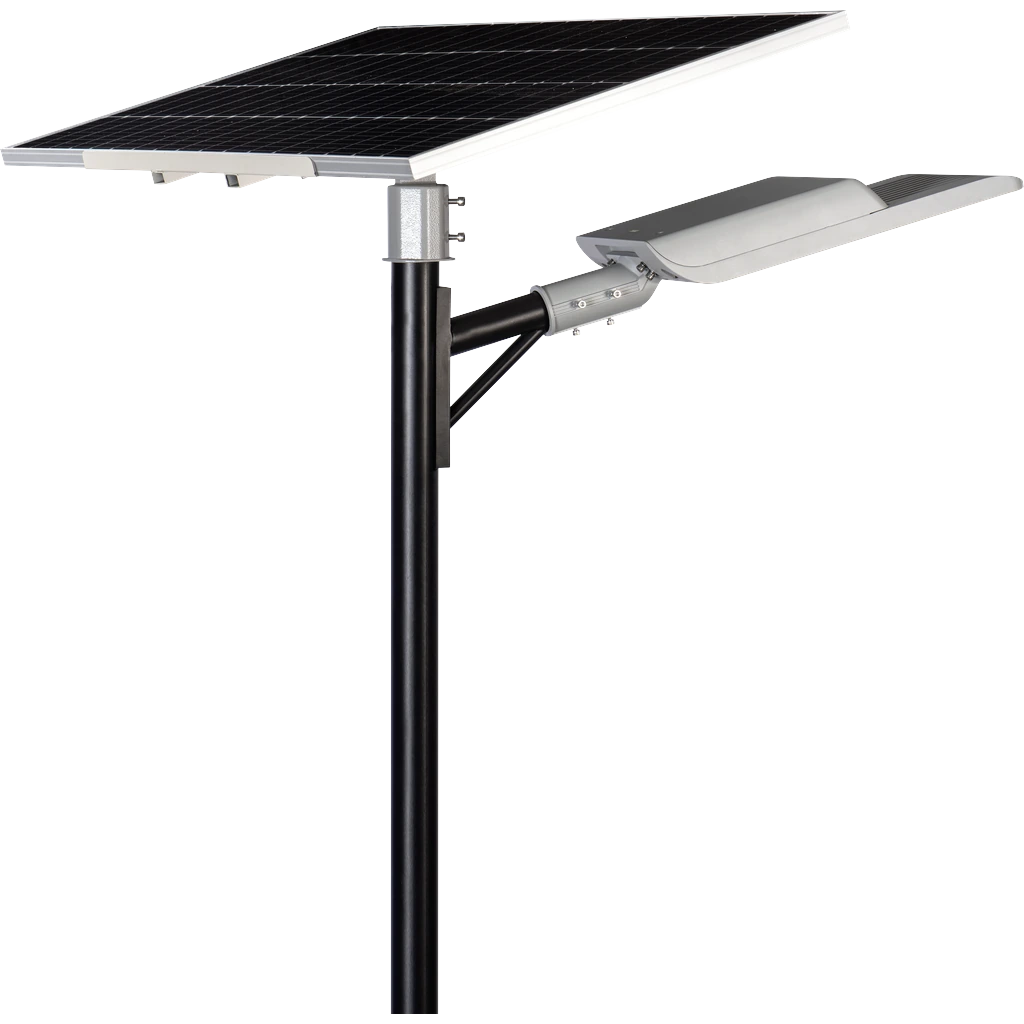
All-in-two solar street lights with a separate panel and light head for flexible panel orientation and higher output. The independent panel captures more sun while the integrated battery keeps the head compact.

All-in-two solar street light range

An independent, angle-adjustable solar panel sits apart from a slim, low-drag light head with an integrated battery — more sun captured, less wind load and easier maintenance. Six series from 12W pedestrian units to 150W+ high-power municipal lights on 3–12m poles.

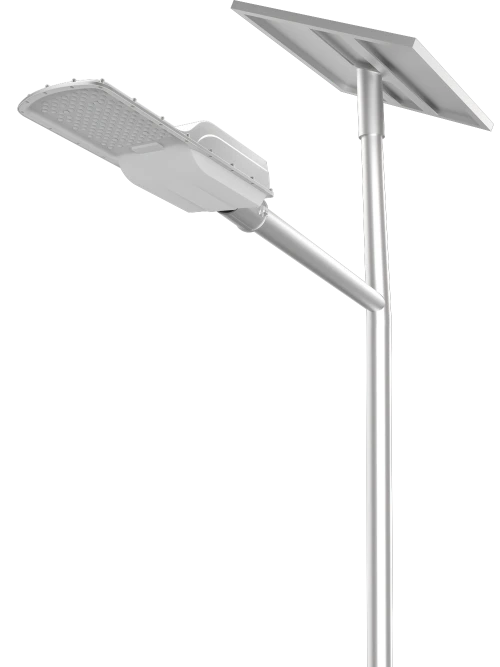
RadiantSun Split Solar Power Street Light

All-in-two solar street light

RadiantSun Split Solar Power Street Light

High-power municipal series with separate adjustable panel and integrated luminaire, 150W–200W+ for multi-lane highways, industrial parks and severe solar environments, 8m–12m+ mounting.

READ PRODUCT BRIEF +

Power Output Reference: 150W to 200W+ high-power LED module (High-efficacy SMD LED array).

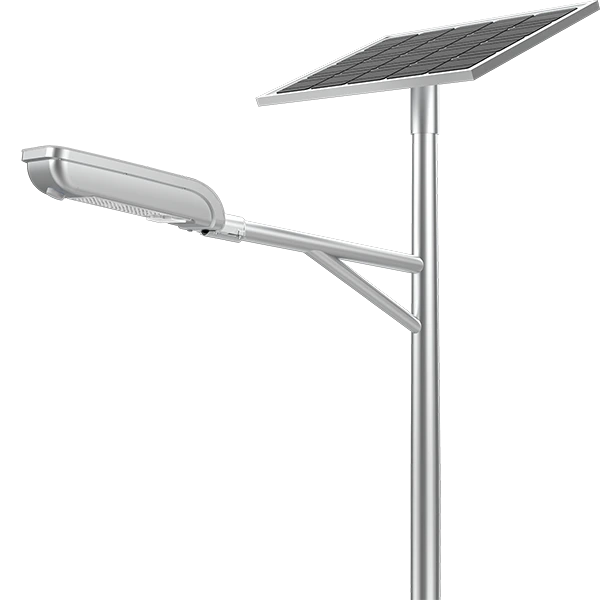
AuroraPath All in Two Solar Power Street Light

All-in-two solar street light

AuroraPath All in Two Solar Power Street Light

Pedestrian-scale semi-integrated lighting, 12W–50W LED with AI-optimized PIR motion dimming, for parks, sidewalks, campus perimeters and residential paths, 3m–10m poles.

READ PRODUCT BRIEF +

Solar Panel: 30W – 120W Monocrystalline (Adjustable)

Battery: LiFePO4 80 – 384 Wh

LED Range: 12W – 50W (6 Models)

Luminous Flux: 2,400 – 10,000 lm

IP Rating: IP66 Waterproof & Dustproof

Mounting Height: 3m – 10m

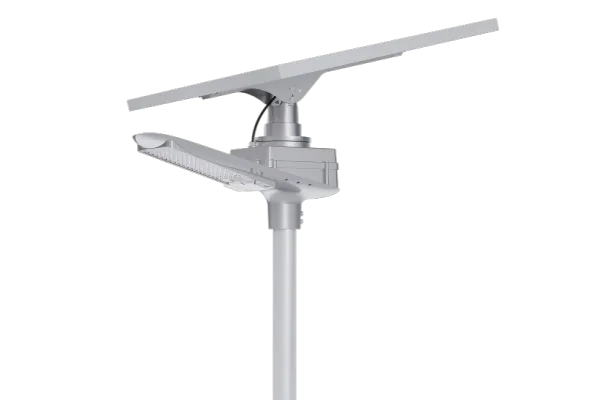
SunBeam All in Two Solar Power Street Light

All-in-two solar street light

SunBeam All in Two Solar Power Street Light

Balanced ease of installation and high efficiency, 190LM/W Philips LED chips with independent adjustable panels, for roads, parking lots and municipal projects. IP66.

READ PRODUCT BRIEF +

Power Range: 60W – 120W Configurable — Models YP-150 / YP-200

Solar Panel: Adjustable Monocrystalline (Separate)

Battery: Integrated LiFePO4 — Smart BMS

LED Efficacy: 190 lm/W — Philips 5050 SMD Chip Array

Ingress Protection: IP66 Waterproof & Dustproof

Controller: MPPT — Programmable Dimming

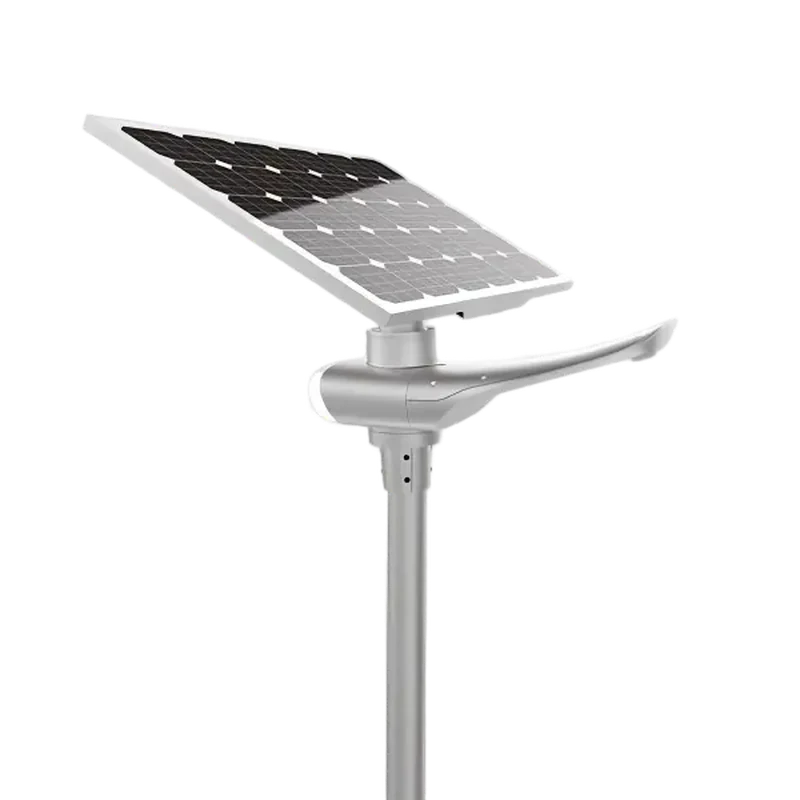
Sailing Series All-in-Two Solar Power Street Light

All-in-two solar street light

Sailing Series All-in-Two Solar Power Street Light

Low-drag semi-integrated design for coastal and high-wind areas, 30W–100W LED with MPPT charging, for ports, islands and boulevards.

READ PRODUCT BRIEF +

Model: RS-SL80P

LED Power: 30W

Lumens: 6,000lm

Solar Panel: 60W

Battery: 192Wh

Mounting: 6-7m

Luminous Efficacy: Solar Module

Up to 185LM/W (Philips 5050 / 3030): High-Efficiency Monocrystalline (A-Grade)

Flyhorse Series All-in-Two Solar Power Street Light

All-in-two solar street light

Flyhorse Series All-in-Two Solar Power Street Light

Heavy-duty municipal semi-integrated light, 100W–150W LED at 190LM/W with Philips 5050 chips, IP66 IK09 and modular clamp-on 5-minute installation.

READ PRODUCT BRIEF +

Solar Panel: Adjustable Monocrystalline (Separate)

Battery: LiFePO4 — Smart BMS — 4,000+ Cycles

LED Range: 100W / 120W / 150W (3 Models)

Controller: MPPT — Programmable Dimming

Road dimensions: Road width, lane count, pole spacing, mounting height, road class (arterial / collector / local)

TrailNova All-in-Two Solar Street Light

All-in-two solar street light

TrailNova All-in-Two Solar Street Light

TrailNova all-in-two solar street light series, 60W-120W, with separate adjustable panel for flexible orientation.

READ PRODUCT BRIEF +

Rated Power: 60W – 120W

Product Housing: Two-piece solar lighting unit

Compare the range at a glance.

Every value below is taken from the individual product page; nothing is estimated. Open a model for its full datasheet.

ModelLumen outputSolar panelBattery
YL-30P2,400 lm30W80 Wh
YL-60P3,000 lm60W128 Wh
YY-804,000 lm60W192 Wh
YY-1006,000 lm70W256 Wh
YH-1008,000 lm100W320 Wh
YH-12010,000 lm120W384 Wh
RS-SL80P6,000lm60W192Wh
RS-SL100P8,000lm80W256Wh
RS-SL120P10,000lm80W320Wh
RS-SL120-A12,000lm100W384Wh
RS-SL200P16,000lm120W512Wh
RS-SL300P20,000lm150W640Wh
Flyhorse-100W~19,000 lm150W Mono~640 Wh
Flyhorse-120W~22,800 lm180W Mono~768 Wh
Flyhorse-150W~28,500 lm200W Mono~960 Wh

Why an all-in-two exists

It solves one specific problem: the pole top cannot carry the panel.

All-in-two splits the light head from the panel, but keeps battery and controller integrated with the head. The reason is physical: on a narrow pole, a heritage street, or a site where the pole must stay visually slim, a full all-in-one housing cannot be mounted without either a bigger pole or a bracket that looks wrong.

It is also chosen where the light has to sit under a canopy, a bridge soffit or a building overhang while the panel sits outside in the sun. In those cases the separation is not cosmetic — it is the only way to get both a lit surface and a charged battery.

The trade is one more cable run between panel and head, and one more bracket to specify. That is the cost of the flexibility, and it is worth being explicit about it in the quotation.

Solar panel: what the split changes

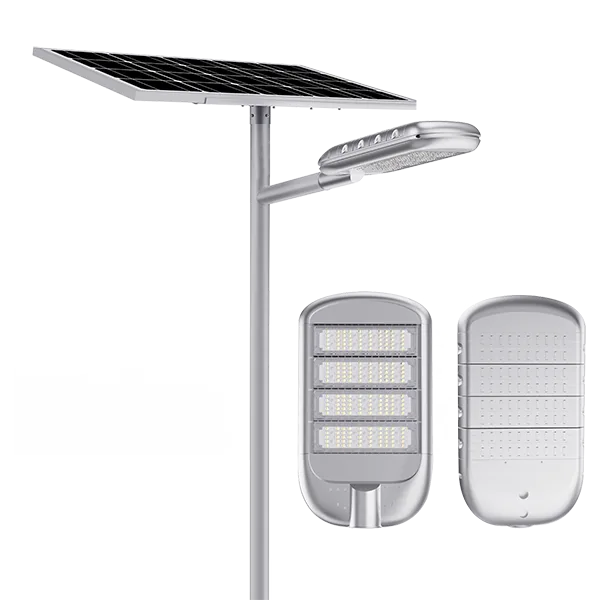
Moving the panel away from the light is an electrical decision as much as a mechanical one.

Separating the panel introduces cable length, and cable length introduces voltage drop. On a 12 V or 24 V system, a few metres of undersized cable can cost more energy than a slightly better panel gains. The cable cross-section should be sized against the actual run, not against a default.

Orientation gets easier, not harder: the panel can face the equator at its own tilt while the head faces the road. That is the main technical benefit of the split, and it is worth using instead of mounting the panel flat because it is convenient.

Shading is the other reason the split exists. A panel mounted where a building or tree shades it at midday will underperform no matter how well the system is sized; moving the panel to a clear position is often cheaper than adding battery.

Where all-in-two earns its cost

Not every site needs it — the ones that do are recognisable.

Heritage and city-centre streets where the pole is fixed and slim. Car parks and plazas where the light must sit under a canopy or between buildings. Sites where the road faces one way and the sun the other. And projects where the client wants the light fixture to be visually identical to an existing pedestrian lamp while still running on solar.

If none of those apply — an open road with a clear pole top — an all-in-one is cheaper, simpler and easier to maintain. Recommending the split there would be selling complexity the site does not need.

Installation and cable routing

The extra cable is where most all-in-two installations go wrong.

The panel cable should run inside the pole or in a UV-rated conduit, never tied to the outside where it will chafe. The entry point needs a gland and a drip loop: water follows cable into the housing, and the housing is where the battery lives.

Commissioning is the second failure point. The controller has to be set for the actual panel and battery on site, and the dimming profile set to the site's operating hours. A split system with default settings will run at full output until the battery is empty and then behave unpredictably.

Warranty and what it covers

Five years is a term, not a promise — the clauses decide what it is worth.

The warranty document should state the covered components, the capacity-retention threshold for the battery, and who pays freight on a claim. Those three clauses are what separate a warranty from a sentence in a brochure.

For an all-in-two system, ask specifically whether the panel cable and glands are covered, because water ingress through a badly installed gland is the most common field failure and the most commonly disputed claim.

Reading the lumen figures

Output, efficacy and beam angle are three different numbers.

Lumen output is total light emitted; efficacy is lumens per watt, which tells you how much of the panel and battery budget goes to light rather than heat; beam angle decides where that light lands. Two fixtures with the same lumens can light very differently if one is a narrow optic and the other a wide one.

For a road, the number that matters is the maintained illuminance on the surface, which depends on mounting height, spacing, tilt and beam. Ask for the layout rather than the lumen figure when the project has a lighting standard to meet.

Certification and compliance

What a tender asks for, and which of it we supply with the shipment.

Fixtures are supplied with CE marking supported by EMC and LVD test reports, and IEC-referenced test data where the specification cites IEC standards rather than EU directives. Manufacturing is certified to ISO 9001, ISO 14001 and ISO 45001, so supplier qualification reviews can be answered with current certificates.

Two points are worth raising before the tender closes rather than after. First, ask whether the certificate set covers the exact model being supplied, not just the series — a report for a 60 W fixture does not automatically cover the 100 W version. Second, ask which documents accompany the shipment and which are chargeable; on municipal projects the difference is sometimes a week of customs time.

All-in-two solar street light FAQ

What is an all-in-two solar street light?

An all-in-two solar street light is an off-grid lighting system that keeps the solar panel and the LED luminaire as two separate components mounted on a single pole. The PV module charges a LiFePO4 battery bank through an MPPT controller, giving dusk-to-dawn illumination without any grid connection or trenching.

What is the difference between all-in-one and all-in-two solar street lights?

In an all-in-one solar street light the panel, battery, controller and LED head are integrated into a single compact unit. In an all-in-two design the solar panel is separate, which allows a larger PV area and better panel orientation for higher output, easier servicing and a cleaner, less bulky pole.

How many rainy days can an all-in-two system run on battery?

Depending on the LED wattage and battery capacity, all-in-two systems are typically specified for 2–5 rainy / cloudy days of autonomy. E-Able Power sizes the battery and panel to your local solar resource and operating hours.

What pole and panel sizes are available?

All-in-two solar street lights are available across a range of LED wattages and pole heights (commonly 6–10 m) with matching monocrystalline panel sizes. The separate panel can be angled toward the sun for maximum yield.

Are all-in-two street lights suitable for large roads and highways?

Yes. Because the panel and lamp are separate, all-in-two systems can support higher LED outputs and larger PV arrays, making them well suited to arterial roads, highways, industrial parks and other sites that need more light.

Can E-Able Power customise an all-in-two system for my project?

Yes. E-Able Power engineers and ships these systems factory-direct for distributors, contractors and project owners — configuring LED output, panel size, battery autonomy, pole height and OEM/ODM branding, with DIALux simulation and sizing support.

Plan your all-in-two solar lighting project.

Discuss product selection, project conditions and OEM/ODM requirements with the E-Able Power team for a system engineered to your site.

Choosing between configurations? Read the solar street light buyer's guide for the four decisions in order.

Download the product datasheet (PDF) for the full model table, compliance list and warranty terms.