BLOGS
Home » Blogs » Blogs » What Are The Uses of Solar Lights?

What Are The Uses of Solar Lights?

Views: 0     Author: Site Editor     Publish Time: 2025-11-14      Origin: Site

Inquire

facebook sharing button
twitter sharing button
line sharing button
wechat sharing button
linkedin sharing button
pinterest sharing button
whatsapp sharing button
sharethis sharing button

Introduction


Are you looking for an eco-friendly and cost-effective lighting solution? Solar street lights have emerged as the answer to many urban and rural lighting challenges. By harnessing the power of the sun, they provide reliable illumination while reducing electricity costs and carbon footprints.

In this article, we will explore the various uses of solar street lights, highlighting their benefits, types, and key considerations for installation. You’ll learn how these lights are transforming outdoor lighting solutions for communities around the world.


Understanding Solar Street Lights: Components and How They Function


Overview of Solar Street Lights

Solar street lights are advanced lighting systems that operate using solar power, setting them apart as an environmentally friendly and cost-efficient option. These systems consist of several essential components, including a solar panel, a battery, LED lights, and a charge controller. The solar panel plays a crucial role, converting sunlight into electricity. This electricity is then stored in rechargeable batteries, which power the LED lights during the nighttime.

At night, the battery powers the LED light, providing illumination to outdoor spaces. The charge controller ensures that the battery does not overcharge or discharge excessively, optimizing the system’s performance. This intelligent management allows solar street lights to operate efficiently with minimal maintenance.

For a deeper technical breakdown, you can check this article on how a solar power street light works.


Component Description Function
Solar Panel A photovoltaic panel that captures sunlight. Converts sunlight into electricity.
Battery Rechargeable battery to store energy. Stores energy for nighttime use.
LED Light Energy-efficient light that provides illumination. Provides bright and efficient lighting during the night.
Charge Controller Regulates the flow of energy between the panel, battery, and light. Ensures efficient charging and prevents overcharging or undercharging.

Key Benefits of Solar Street Lights

  • Energy Efficiency: One of the standout features of solar street lights is their reliance on renewable solar energy, which makes them an incredibly energy-efficient solution. Unlike traditional street lights that consume electricity from the grid, solar street lights use the sun's free energy, significantly lowering electricity bills for municipalities and businesses.

  • Maintenance Simplicity: Solar street lights require less maintenance compared to traditional lighting systems. Since they don't depend on electrical wiring and infrastructure, they have fewer moving parts and components that are prone to wear and tear. This simplifies maintenance, reduces operational costs, and extends the lifespan of the lighting system.

  • Environmental Impact: By utilizing clean and renewable solar energy, solar street lights help reduce greenhouse gas emissions, lower dependence on fossil fuels, and contribute to a cleaner environment. This makes them a sustainable solution for lighting public spaces while helping communities meet environmental goals.


How Solar Street Lights Enhance Urban and Rural Areas

Solar street lights are not only beneficial in urban areas but also have a significant impact in rural and remote locations. In urban environments, solar lights are used to provide supplementary lighting in public spaces such as streets, parks, and sidewalks. Their integration into the urban landscape helps reduce grid electricity demand while still offering reliable illumination.

In rural and off-grid areas, solar street lights provide a crucial lighting solution where access to electricity is limited or non-existent. These areas often struggle with unreliable grid connections or lack the infrastructure to support traditional street lighting systems. Solar street lights offer a simple, affordable, and sustainable way to improve safety and accessibility in remote areas, helping to bridge the gap in lighting infrastructure.


Solar Street Light


Practical Applications of Solar Street Lights in Various Settings


Urban and Suburban Applications

Solar street lights are widely used in urban and suburban settings to improve lighting and enhance public safety. Some key applications include:

  • Streets and Roads: Solar street lights are often installed along streets and roads to improve visibility and enhance safety for both drivers and pedestrians. They help illuminate dark intersections and poorly lit areas, reducing the risk of accidents and making roads safer at night.

  • Public Parks and Pathways: In parks, gardens, and pedestrian walkways, solar street lights are used to create a welcoming and secure environment. These lights enhance the aesthetic appeal of public spaces while ensuring that visitors can navigate these areas safely after dark.

  • Pedestrian Zones: High-traffic areas such as plazas, shopping districts, and market zones benefit from solar street lights, providing much-needed illumination for pedestrians. These lights are especially valuable in areas where grid power is costly or unreliable, offering a sustainable and efficient solution.


Rural and Remote Area Applications

Solar street lights play an essential role in rural and off-grid communities. In these locations, access to the electrical grid is often either too expensive or non-existent. Solar street lights offer a solution that is both effective and affordable:

  • Lighting in Off-Grid Locations: Solar lights provide vital illumination for remote villages, rural roads, and agricultural sites. These areas often lack the infrastructure to support traditional street lighting, but solar street lights can be installed quickly and cost-effectively, offering much-needed visibility for outdoor areas.

  • Cost-Effective and Energy-Efficient: Solar street lights are especially beneficial in rural locations where the installation of grid-based electricity systems is not feasible. They are a low-cost, energy-efficient solution that requires no external power supply, helping communities save on energy costs and reduce reliance on expensive infrastructure.

  • Supporting Rural Development: By providing reliable lighting, solar street lights contribute to the development of rural areas. They improve accessibility, enhance safety, and support agricultural activities by offering extended hours of work, making these regions more functional and livable.


Disaster-Prone and Emergency Situations

Solar street lights are also invaluable in disaster-prone areas or places where power outages are frequent. Unlike traditional grid-powered street lights, which rely on an external electricity source, solar street lights are independent of the grid. This makes them an ideal solution for areas affected by natural disasters such as hurricanes, floods, or earthquakes.

In the event of a power failure, solar street lights continue to operate, ensuring that public spaces remain illuminated. This enhances safety and visibility during emergencies when traditional lighting systems may fail. In regions where power outages are common due to natural disasters, solar street lights provide a consistent, reliable source of illumination, improving safety and preparedness.


The Advantages of Using Solar Street Lights in Public Spaces


Environmental Benefits

Solar street lights significantly reduce the environmental impact of traditional street lighting systems. By relying on solar energy instead of fossil-fuel-based electricity, these lights help cut greenhouse gas emissions and air pollutants produced by power plants. Every solar street light installed can gradually lower a city’s overall carbon footprint, especially when used at scale across roads, parks, and residential areas.

Because they use sunlight as their only energy source, solar street lights also reduce the demand on aging power grids. This is especially important in regions where electricity generation still depends heavily on coal or oil. Less pressure on the grid means fewer blackouts and lower peak-load requirements, which supports a smoother energy transition towards renewables.

Solar energy is abundant, free, and available in most parts of the world, making solar street lights an environmentally friendly alternative to conventional fixtures. Unlike diesel generators or other backup systems, they do not produce noise, fumes, or fuel waste. In the long term, widespread adoption of solar street lighting can complement other green initiatives, such as electric vehicles and smart cities, by building a cleaner and more resilient urban environment.


Economic Advantages

One of the key selling points of solar street lights is their ability to deliver long-term cost savings. While the initial installation cost may be higher than that of conventional grid-tied street lights, the ongoing operational expenses are much lower. There are no monthly electricity bills for a solar street light, because each unit generates its own power from sunlight.

Solar street lights also reduce infrastructure-related expenses. In many projects, there is no need to dig trenches, lay underground cables, or upgrade transformers and distribution lines. This is particularly valuable in new developments, rural roads, parking lots, industrial parks, and private campuses, where grid extension would be expensive and slow.

Maintenance requirements are generally lower as well. Modern solar street light systems use LED luminaires and advanced batteries designed for long service life. Fewer lamp replacements, less wiring repair, and remote monitoring options all help reduce labor and maintenance costs. For large-scale deployments, this can translate into substantial savings in manpower and spare parts over many years.


Enhancing Public Safety and Security

Properly illuminated streets and public spaces play a crucial role in enhancing safety for pedestrians, cyclists, and drivers. Solar street lights contribute to this by delivering reliable, consistent illumination even in areas where grid power is unstable or unavailable. Well-designed lighting improves depth perception, makes obstacles more visible, and reduces the likelihood of traffic accidents at night.

A solar street light can also be strategically placed in previously dark or underserved locations, such as alleyways, intersections, paths near schools, or park entrances. Bringing light to these spots helps residents feel safer when walking or commuting after sunset. In community surveys, people often report higher comfort levels and a stronger sense of belonging when public spaces are well lit.


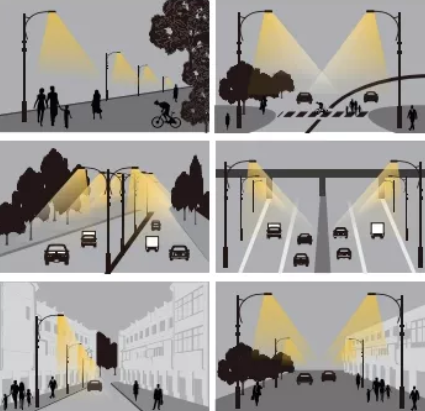
applications of Solar Street Light


Exploring the Different Types of Solar Street Lights and Their Features


Split Solar Street Lights

The key advantage of split solar street lights is that they allow the solar panel to be placed in an optimal location for sunlight exposure, independent from the light pole. This design makes it easier to avoid shading from trees, buildings, or signboards, so the system can harvest more energy throughout the day. A split solar street light also offers convenient maintenance, because the battery box and controller are usually mounted in accessible positions. This structure is especially suitable for projects that require higher power, larger panels, or customized system configurations.


All-in-One Solar Street Lights

These systems are compact and easy to install, as all the components are integrated into one unit mounted on top of the pole. An all-in-one solar street light typically combines the solar panel, battery, LED module, and controller in a slim, modern housing, which reduces wiring work and labor time on site. Because of their clean appearance, they are ideal for residential streets, parks, campuses, and commercial areas that value both performance and aesthetics. At the same time, the integrated design helps improve reliability, since all parts are engineered to work together as a single system.


All-in-Two Solar Street Lights

All-in-two solar street lights feature separate components for the solar panel and battery, offering flexibility in installation while keeping the light head compact. In this configuration, the battery is often built into the lamp body or installed on the pole, while the solar panel is mounted above, angled for maximum energy capture. These lights are highly efficient and commonly use lithium-ion or LiFePO₄ batteries that provide long-lasting performance and stable output even in harsh climates. An all-in-two solar street light is a good balance between the fully integrated look of all-in-one designs and the high customization level of split systems.


Important Factors to Consider When Installing Solar Street Lights


Optimal Solar Panel Placement and Sizing

The effectiveness of solar street lights depends on the proper placement and sizing of the solar panels. To ensure maximum energy efficiency, solar panels must be positioned in areas with the most direct sunlight exposure.Consider factors such as shading from surrounding structures and the tilt of the panel to ensure that it collects the maximum amount of solar energy throughout the day.


Selecting the Right Battery for Long-Term Performance

Battery capacity and longevity are critical for ensuring that solar street lights function efficiently through the night. Lithium-ion batteries are preferred for their high efficiency, long lifespan, and ability to withstand extreme temperatures.Choose batteries with sufficient capacity to store enough energy for extended lighting hours, even during cloudy days or winter months.


Illumination Requirements and Control Features

Solar street lights should provide the right amount of brightness to meet the specific needs of the location. Features such as motion sensors, dimming controls, and timers can be added to optimize energy usage.Adjusting the brightness level ensures that solar street lights provide enough light without being wasteful. Motion sensors can also reduce energy consumption by dimming the lights when no activity is detected.


Factor Consideration Importance
Solar Panel Placement Ensure maximum sunlight exposure with minimal shading. Maximizes energy capture and system efficiency.
Battery Capacity Choose batteries with high capacity for long-lasting power. Ensures reliable illumination throughout the night.
Illumination Level Choose the right brightness for the specific location. Provides adequate lighting while conserving energy.
Control Features Add motion sensors, dimming, and timers for efficiency. Reduces energy consumption and enhances system longevity.

Conclusion


Solar street lights provide a sustainable, cost-effective, and eco-friendly solution for both urban and rural areas. Their ability to operate off the grid and require minimal maintenance makes them an excellent choice for reducing energy costs and lowering carbon footprints. As solar technology continues to advance, these lights promise even greater efficiency and adaptability. For communities seeking reliable, green lighting solutions, solar street lights from E-Able Solar offer exceptional value. Their products, designed for durability and efficiency, ensure long-lasting performance and energy savings, contributing to a more sustainable future.


FAQ


Q: What are solar street lights used for?

A: Solar street lights are used for lighting streets, parks, and public areas while reducing energy use.


Q: How do solar street lights work?

A: Solar street lights convert sunlight into power, store it in a battery, and use it at night for illumination.


Q: What are the benefits of using solar street lights?

A: A solar street light offers energy savings, low maintenance, and strong environmental advantages.


Q: Are solar street lights expensive to install?

A: A solar street light has a higher upfront cost, but it lowers long-term energy and maintenance expenses.


Q: Can solar street lights be used in remote areas?

A: A solar street light works well in off-grid locations where traditional power is costly or unavailable.


E-Able Solar is a prominent Chinese manufacturer of solar-powered street lights, offering a wide range of products that includes All-in-One solar power street lights, All-in-Two solar power street lights, Split Solar Power Street Lights, and Solar Garden Lights...

QUICK LINKS

PRODUCTS

CONTACT US
   +86-15355589600
   tengye.arthur
    sales@e-ablepower.com
   Building C, Huiheng Industrial Park, No. 3 Fenghuang West Road, Shajiao, Humen Town, Dongguan City, Guangdong Province

Copyright © 2023 E-Able Power All rights reserved. Sitemap Support by leadong Privacy Policy