Top Application Scenarios for Poles with Vertical Solar Panel
"Environmental challenges dictate engineering choices. As global infrastructure expands, the advanced design of poles with vertical solar panel technology steps in to overcome the physical limitations of traditional flat-panels, delivering maintenance-free, off-grid lighting for modern urban environments."
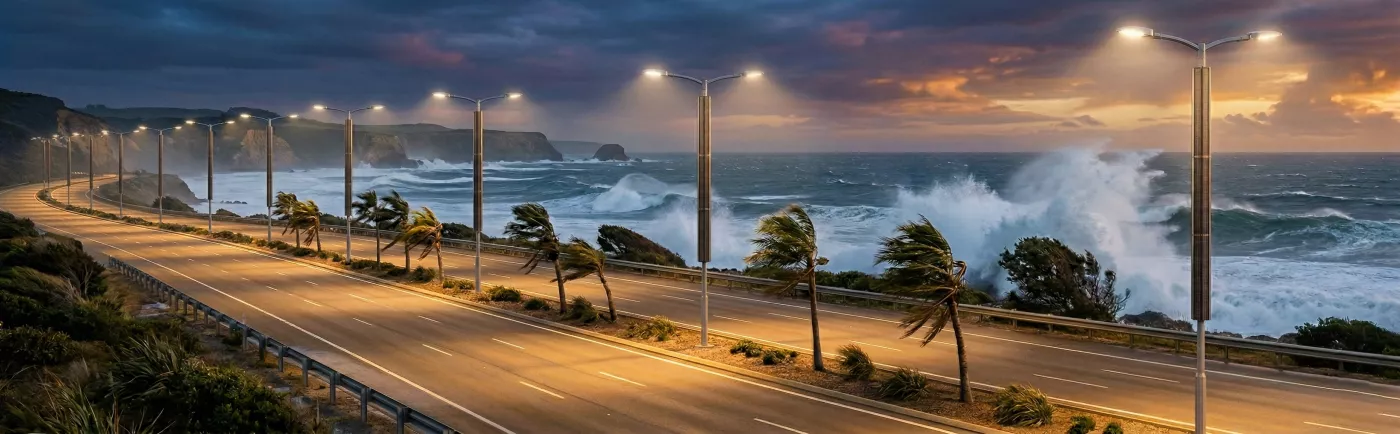
Coastal Roads & High-Wind Highways
Coastal infrastructures face constant corrosive salt spray and seasonal hurricanes. Traditional panels act like sails, creating structural fatigue. Our vertical PV modules reduce the aerodynamic drag coefficient, ensuring the light pole remains stable even during extreme typhoons.
Fig 1.0 - Desert Self-Cleaning Deployment
Engineering Necessity & Strategic Value
Passive Self-Cleaning
Gravity prevents sand and dust from settling on the PV surface. Even with minimal rainfall, panels remain clean, ensuring uninterrupted daily battery charging.
Low Aerodynamic Drag
The cylindrical profile allows high-speed sea breezes to wrap smoothly around the structure, mitigating structural fatigue and hurricane damage.
Visual Architecture
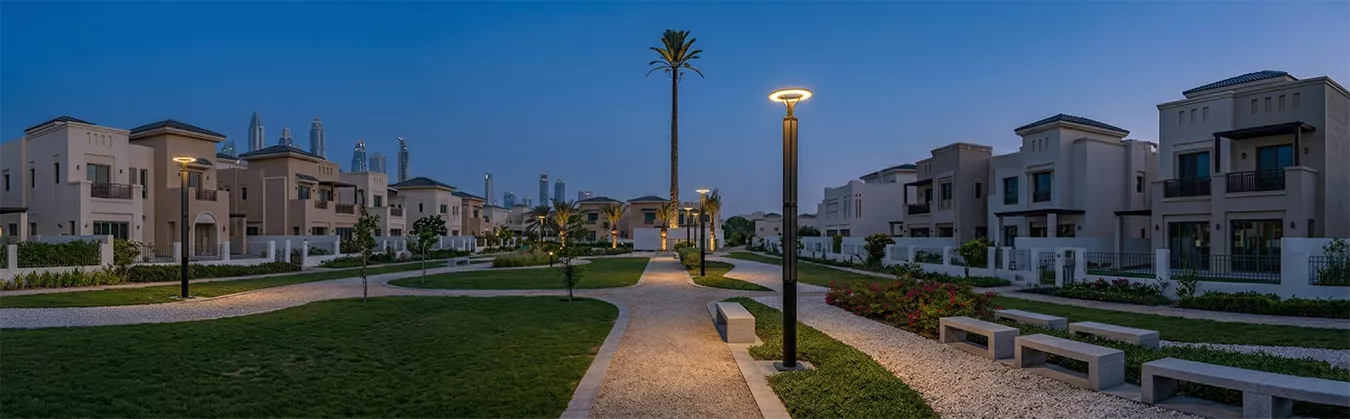
Sleek, futuristic silhouette integrates seamlessly into premium municipal parks, eliminating the "visual pollution" of bulky top-mounted fixtures.
E-Able Solar is a prominent Chinese manufacturer of solar lighting and commercial energy storage systems, offering All-in-One and All-in-Two solar street lights, Split solar street lights, Solar Garden Lights, and C&I to utility-scale LiFePO4 energy storage solutions (50kW to 1MW+).
+86-15355589600 sales@e-ablepower.com Building C, Huiheng Industrial Park, No. 3 Fenghuang West Road, Shajiao, Humen Town, Dongguan City, Guangdong Province