Commercial and industrial (C&I) energy storage is no longer a niche experiment — it is a budget line item. But sizing a battery energy storage system (BESS) correctly is where most projects go wrong. Undersize and you miss the peak-shaving window; oversize and you burn capital on idle capacity. This guide walks through the sizing process step by step — from 50kWh cabinets to 2.4MWh containers — using the same methodology E-Able Power engineers apply to real projects.
Step 1: Understand Your Load Profile
Sizing starts with data, not intuition. Collect:
Monthly electricity bills (last 12 months) — your tariff structure and demand charges.
15-minute interval load curves — your peak demand (kW) and daily energy shape (kWh).
Critical load list — which equipment must keep running during an outage.
From these you derive the two numbers that drive everything: peak power (kW) and energy to shift or back up (kWh).
Step 2: Size Power (kW) First
The inverter/power rating must cover your peak-shaving target or critical-load peak. As a rule, target the top of your demand curve — typically the highest 15-minute average you want to clip. E-Able Power's cabinet range covers the common C&I bands:
System
Power / Energy
Typical Fit
GCB-E50
50kW / 50kWh
Small commercial, shops, workshops
GCB-E100
50kW / 100kWh
Offices, light manufacturing
GCB-E240
125kW / 241kWh
Industrial plants, EV hubs, cold storage
GCB-C1200
500kW / 1.2MWh
Large C&I parks, microgrids
GCB-C2400
1MW / 2.4MWh
Utility-scale, industrial clusters
Step 3: Size Energy (kWh) for Your Objective
Apply the 2–4 hour rule: for peak shaving or backup, size the battery for 2–4 hours of rated discharge at your target load. Common examples:
Peak shaving: battery covers the demand window above your shaving threshold — often 2–4 hours in the afternoon peak.
TOU arbitrage: battery charges in the cheap night window and discharges during peak-rate hours.
Backup: battery must cover critical loads for your declared autonomy (e.g., 2 hours of UPS-style cover, or 8 hours for night operation).
Longer durations than 4 hours rarely pay back in tariff markets — match the window, not the wish.
Step 4: Cabinet or Container?
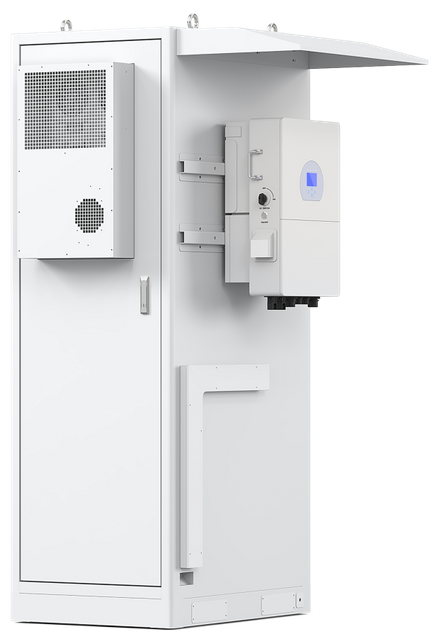
BESS cabinets (GCB-E series, 50–241kWh): all-in-one IP54 enclosures with integrated PCS, BMS, EMS, HVAC, and fire suppression. Deploy behind the meter at the facility; commissioning in days.
Containerized ESS (GCB-C series, 1.2–2.4MWh): 20ft/40ft containers for centralized, multi-MWh storage — utility-scale projects, renewable integration, large industrial clusters.
Both share Grade A LiFePO4 cells (280Ah/314Ah), cell-level BMS, 6,000+ cycle life, and a 5-year warranty. Choose cabinets for distributed, site-level storage; containers for centralized scale.
Step 5: Get the Engineering Proposal
Send E-Able Power your load profile, tariff schedule, solar plan, and backup requirements. You receive a complete technical proposal — confirmed capacity, operating mode, and protection design — within 2–3 business days, free. No off-the-shelf guesswork: every system is engineered for your site.
Frequently Asked Questions
Q: What is the payback period for a C&I BESS?
Typically 3–6 years depending on tariff structure, demand charges, and solar resource. Higher peak rates and demand charges shorten payback. E-Able Power models your specific cash flow before you commit.
Q: Can the system run off-grid?
Yes — E-Able Power systems support grid-tied, off-grid, and hybrid modes. Off-grid operation requires matching battery capacity to your full night load, which we size in the proposal.
Q: What about installation and maintenance?
Installation requires a level pad, ventilation clearance, and local code compliance — typically 1–3 days on site. Annual maintenance is minimal: inspection, HVAC filter cleaning, and BMS health checks. LiFePO4 needs no water or electrolyte.
E-Able Solar is a prominent Chinese manufacturer of solar lighting and commercial energy storage systems, offering All-in-One and All-in-Two solar street lights, Split solar street lights, Solar Garden Lights, and C&I to utility-scale LiFePO4 energy storage solutions (50kW to 1MW+).
+86-15355589600 sales@e-ablepower.com Building C, Huiheng Industrial Park, No. 3 Fenghuang West Road, Shajiao, Humen Town, Dongguan City, Guangdong Province