
The best height for solar street lights is usually between 6 m and 12 m, chosen for the road width, the target lux level, and the LED wattage—not by “going as tall as possible.” Mounting height sets how light spreads, how uniform the road looks, and how hard the solar panel and battery must work. Get it wrong and you buy glare, dark gaps, or oversized poles you did not need.
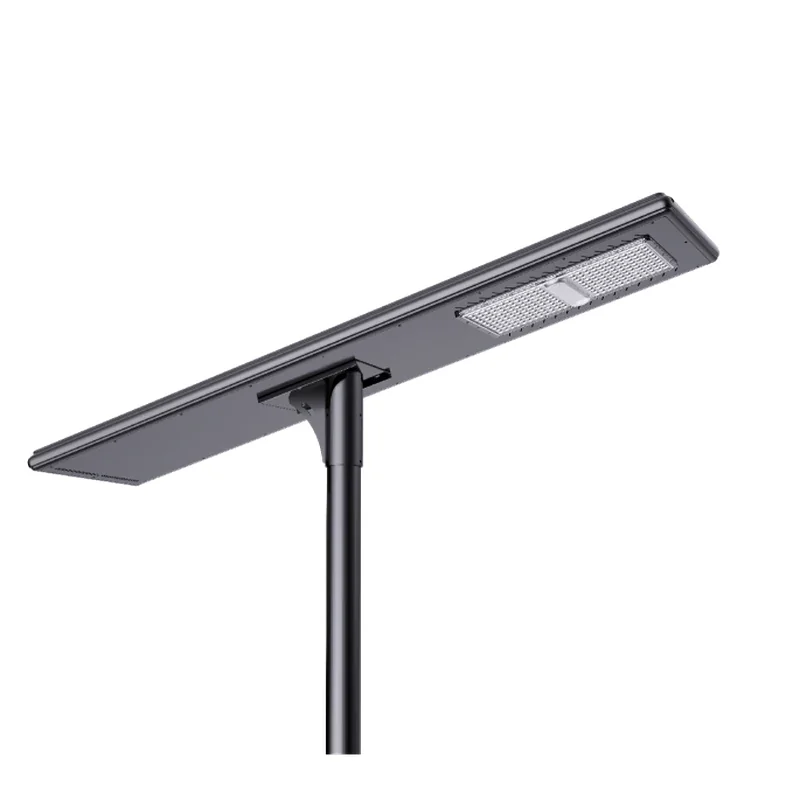
This guide is a practical rewrite of our older height article. It maps common pole heights (6 m, 8 m, 9 m, 10 m, 12 m) to road types, typical LED power bands, and spacing rules of thumb, then shows how fixture layout—all-in-one, all-in-two, split, SolarWrap vertical PV, or high mast—changes the decision.
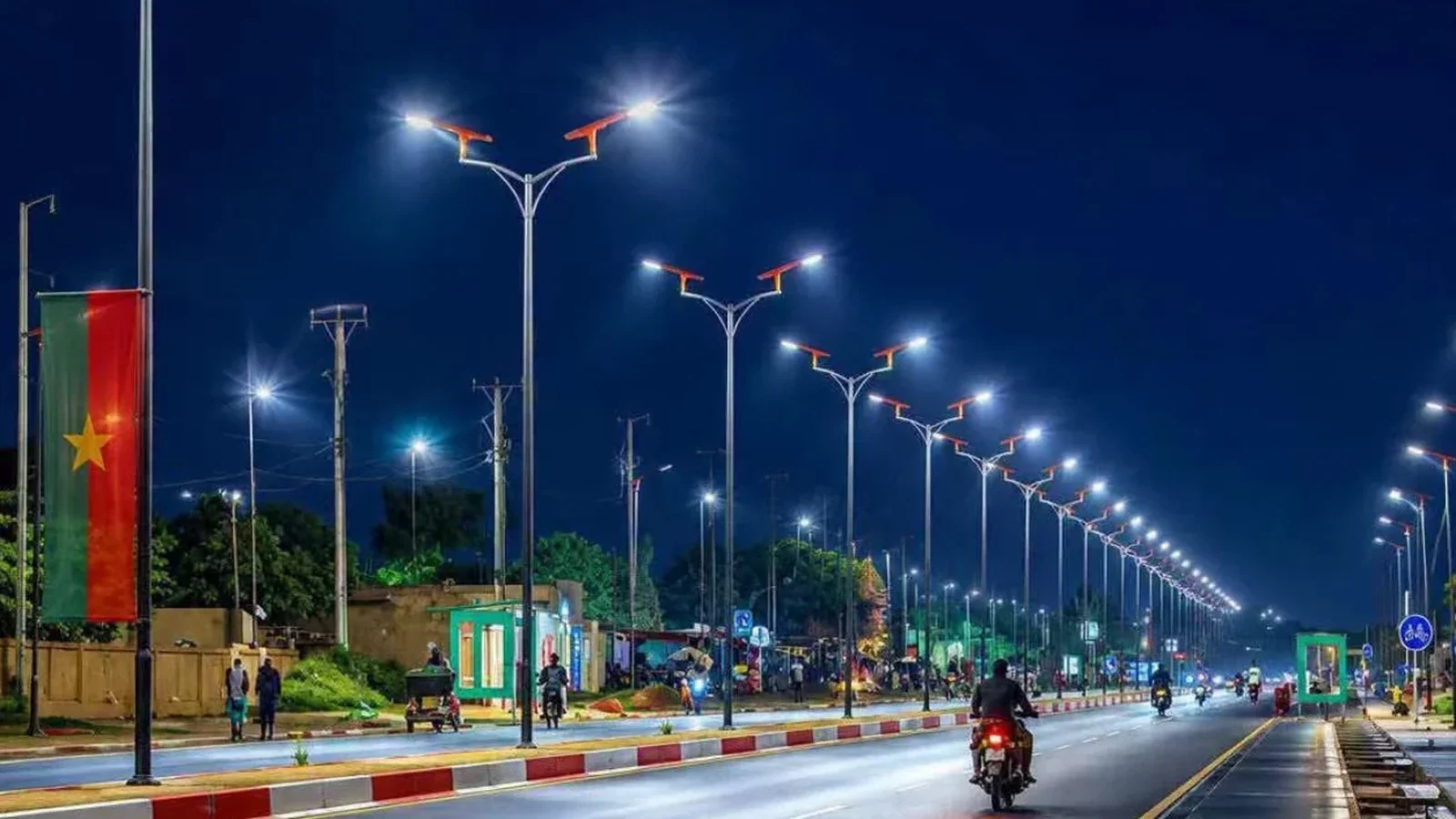
Why mounting height matters more than raw watts
Pole height is a lighting-design input, not a marketing number. Three effects dominate:
- Road geometry — Wider carriageways need more mounting height so the beam reaches the far lane without deep shadows.
- Lux and uniformity — Target lux depends on road class. Height and optic type decide whether you hit average lux with acceptable uniformity, or create bright pools and dark strips. For how we set required lux, see our standard lux levels guide.
- Glare and driver comfort — A high-wattage LED placed too low sits in the driver’s field of view and feels harsh, even if the horizontal lux reading looks fine.
Why “taller is better” is usually wrong
Raising the fixture spreads light over a larger circle, so illuminance on the road falls roughly with the square of the distance from the optic. That has four practical consequences for solar street lighting:
- You need more LED power for the same lux—so a larger PV module and battery, higher cost, and more wind load on the pole.
- Uniformity can get worse if spacing stays the same while height jumps without a matching optic.
- Glare control is not automatic — Tall poles help only when the optic is aimed and cut-off correctly; a poorly aimed high mast still blinds.
- Structural and permit cost rises — Foundations, galvanizing, and (often) approvals scale with height. Many municipalities treat poles above about 12 m as a different class of work.
The right solar street light pole height is the lowest height that still meets lux, uniformity, and glare goals for that road—then you size LED, PV, and battery to that geometry.
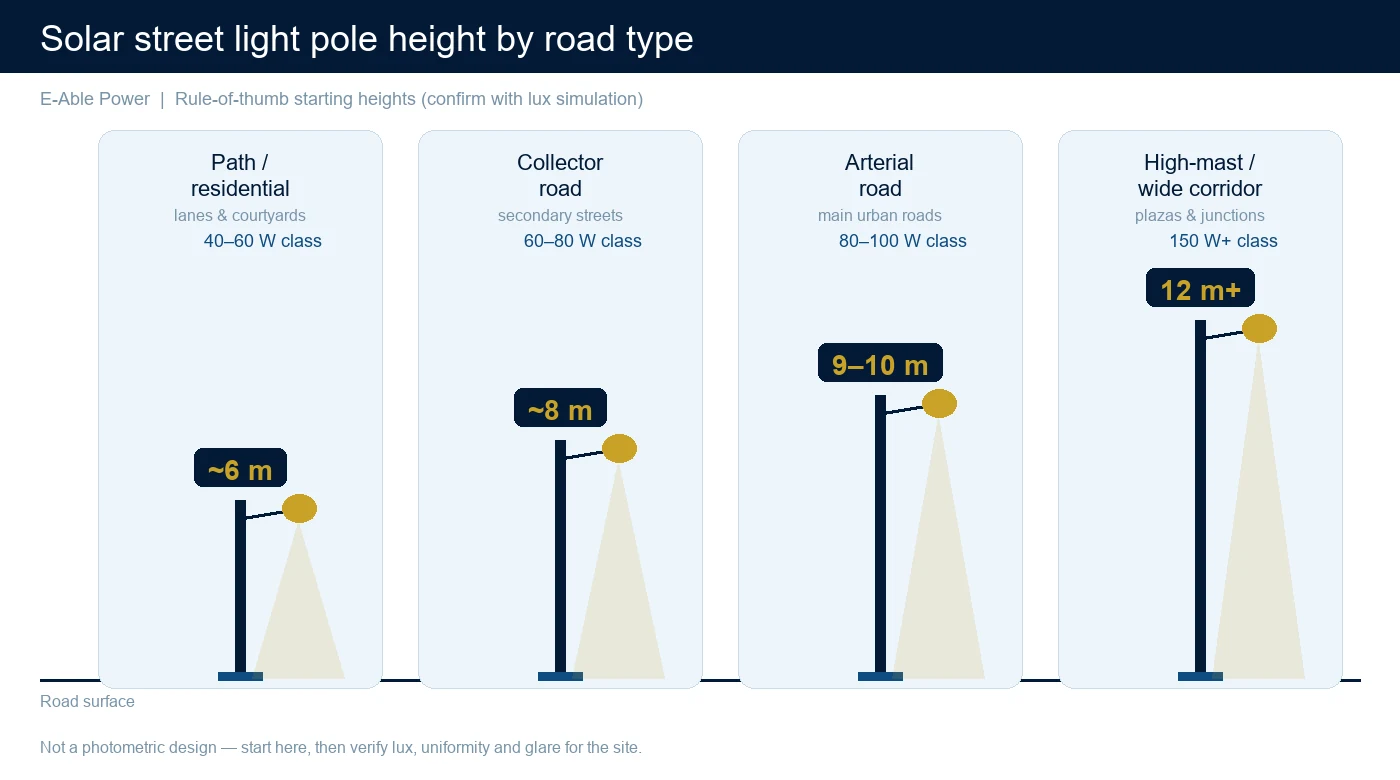
Height × application × typical LED power
Use this matrix as a starting point for tenders and first-pass layouts. Final selection should be checked with a lighting simulation (for example DIALux) and local road-lighting rules.
| Mounting height | Typical application | Typical LED power band | Spacing idea (rule of thumb) |
|---|---|---|---|
| 3–4 m | Paths, gardens, plazas (post-top / decorative) | 10–30 W | ~3–4 × height |
| 5–6 m | Residential lanes, courtyards, campus roads | 30–50 W | ~3–3.5 × height |
| 7–8 m | Secondary urban streets, collector roads | 50–80 W | ~3–3.5 × height |
| 9–10 m | Main urban roads, wider collectors | 80–120 W | ~3–4 × height |
| 11–12 m | Wide arterials, multi-lane avenues | 100–150 W+ | Check optic + dual-side layout |
| 15 m+ | Yards, ports, junctions, large open areas | High-mast LED arrays | Project-specific (often fewer, taller masts) |
Common paired configurations you will see on municipal BOQs mirror this table: about 50 W on 7 m, 60 W on 8 m, 80 W on 9 m, and 100 W on 10 m single-arm poles—then adjust for road width, reflectance, and autonomy nights.
Recommended solar street light mounting height by road type
Residential and community roads (about 6 m)
For quiet residential streets, 6 m is often the sweet spot: enough spread to cover one or two lanes, still low enough that 30–50 W LEDs can deliver comfortable lux without aggressive glare. Compact Helia all-in-one fixtures are a frequent fit when installers want one unit on the pole tip.
Secondary urban / collector roads (7–8 m)
When roads widen or design speed rises, step to 7–8 m and roughly 50–80 W. All-in-two designs such as AuroraPath or the Sailing Series help when you need a larger PV panel than an all-in-one head can carry—useful for long autonomy or weaker winter sun.
Main urban roads (9–10 m)
Nine to ten metres is the classic answer to “what is the best height for solar street lights” on primary urban corridors. Pair with 80–120 W class LEDs, Type II/III roadway optics, and spacing near 3–4× mounting height. Split systems remain popular here because the panel can face true south (or the best irradiance azimuth) while the luminaire aims at the road.
Wide arterials and multi-lane avenues (11–12 m)
At 11–12 m, verify both sides of the road and median options. Dual-arm poles, staggered layouts, or higher lumen packages are common. Do not simply scale a 6 m residential layout upward—re-run uniformity and glare.
Open areas and critical junctions (high mast)
Parking aprons, logistics yards, and large junctions often move into high-mast territory. That is a different product family from roadway solar street lights; see our high mast lighting overview.
Spacing, arms, and vertical solar poles
A simple field check: start near 3 to 3.5 times the mounting height between poles on a single-side layout, then tighten or widen after simulation. Bracket arms shift the optic over the lane and can let you keep a slightly shorter shaft for the same road coverage.
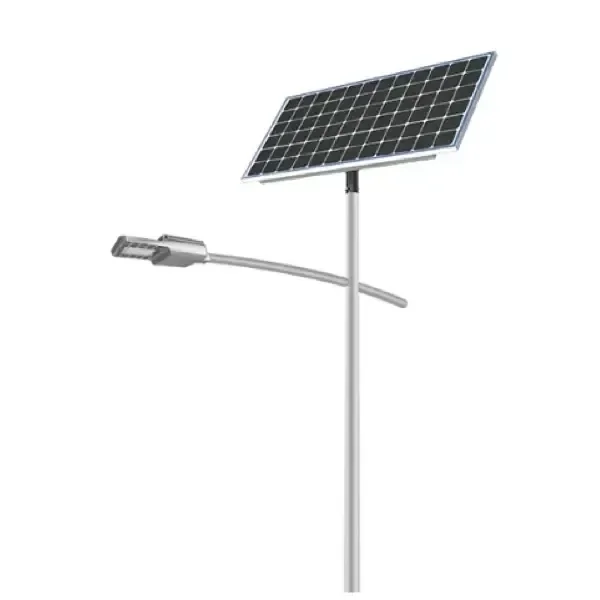
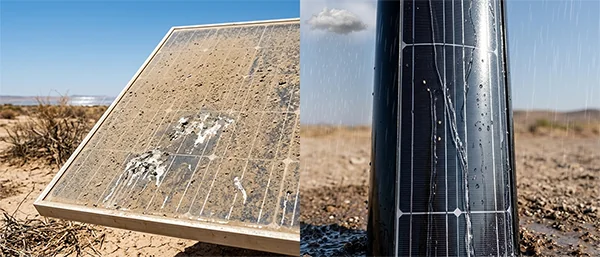
If wind, bird droppings, or narrow right-of-way make flat rooftop panels awkward, vertical wrap modules on the shaft are worth comparing. Our installation guide for poles with vertical solar panels and the comparison of traditional vs vertical-panel poles explain when SolarWrap-style layouts beat a top-mounted panel—especially when the “best height” is already fixed by the lighting design.
How to choose height in five steps
- Classify the road and note width, lanes, and any trees or building setbacks.
- Set the lux target from the project specification or the method in our lux guide.
- Pick a candidate mounting height from the matrix above (6 / 8 / 9 / 10 / 12 m).
- Select LED power and optic, then confirm PV and battery for local sun hours and autonomy.
- Simulate and iterate — change height only when lux, uniformity, or glare fail; do not raise poles to “look more premium.”
FAQ
What happens if the solar street light pole is too low?
Coverage shrinks, hot spots appear under the fixture, and dark gaps open between poles. Drivers also see more glare because the LED sits closer to eye level.
What if the pole is too high?
Average lux drops unless you increase wattage. That forces a larger solar array and battery, raises wind load, and can still leave poor uniformity if spacing is not redesigned.
Is 8 m or 10 m better?
Neither is universally best. Eight metres suits many secondary streets with ~60–80 W LEDs; ten metres suits wider main roads with ~100 W class luminaires. Choose from road width and lux—not from habit.
Do taller masts need special permits?
Often yes above roughly 12 m. Always check local codes before foundation work.
Related product and guide links
- All-in-one solar street lights
- All-in-two solar street lights
- Split solar street lights
- Helia all-in-one · AuroraPath all-in-two · Sailing Series
- SolarWrap vertical solar panels
- High mast LED lighting
- How we determine required lux levels
- Vertical solar panel pole installation guide
- Traditional vs vertical-panel poles