
Chile is one of the most demanding solar environments on earth - and one of the most rewarding. With some of the highest irradiance levels in the world, long coastal stretches exposed to salt air and wind, and a fast-growing pipeline of road, mining and public-infrastructure projects, the country is a natural home for vertical solar lighting. In this field report we share how E-Able Power trained its Chile partner on the SolarWrap family of vertical solar modules and cylindrical solar pole lights.
A classroom session on the new product range
The visit opened with a training session at our partner's offices. The agenda covered the new E-Able Power line-up, with a focus on SolarWrap street lighting and the vertical solar modules that power it. Because these products are unusual in the market, the session spent most of its time on how the modules work, how they are specified and how they are installed - not just on the catalogue numbers.

Unpacking and inspecting the modules
After the classroom session, the team moved to the warehouse to inspect a delivery of SolarWrap modules straight out of their export packaging. Vertical solar modules travel as long cylindrical units, so the first job is always a careful unpacking and visual check: glass and cell integrity, junction box seating, cable and connector condition, and that the mounting hardware matches the order.
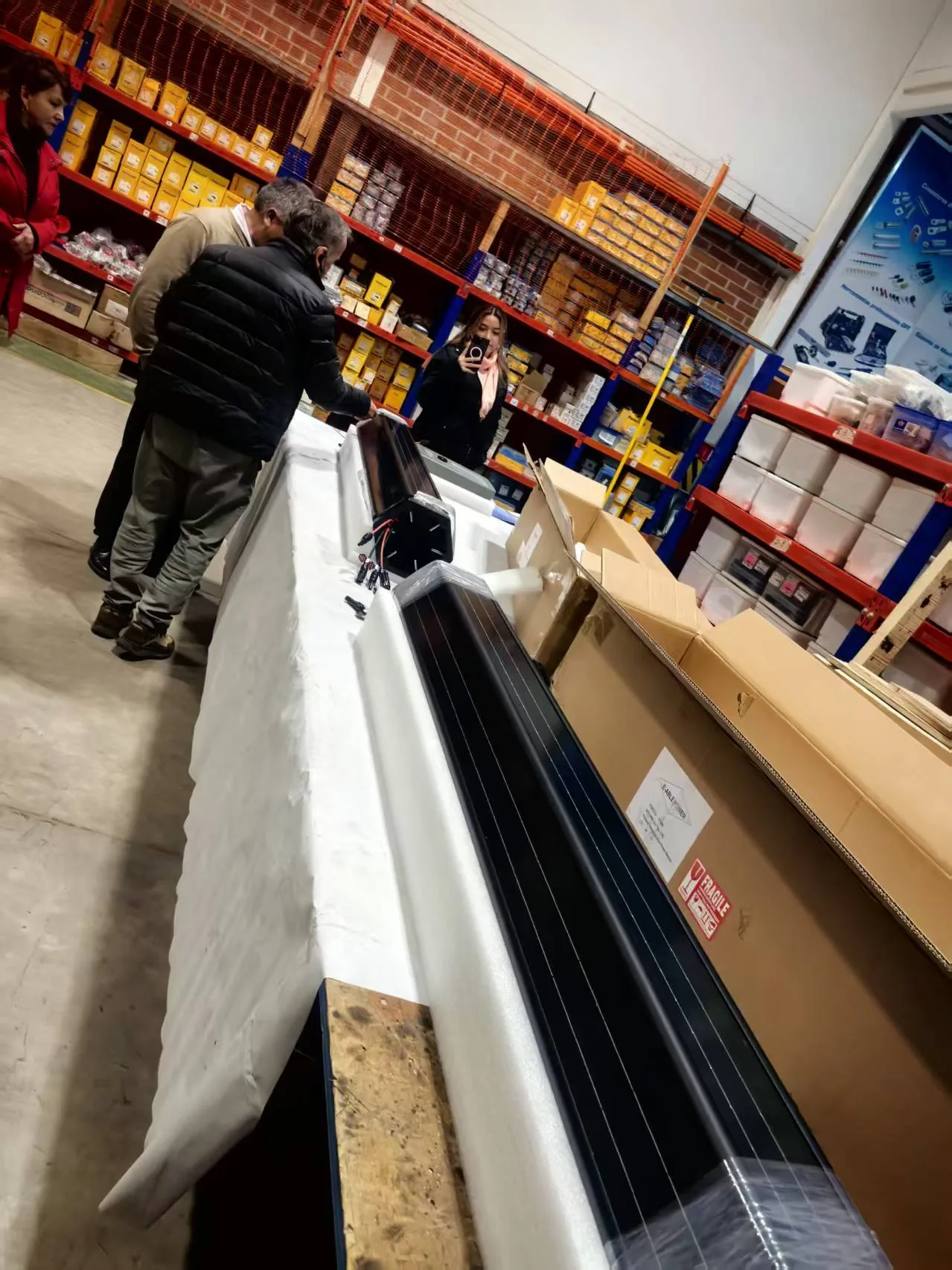
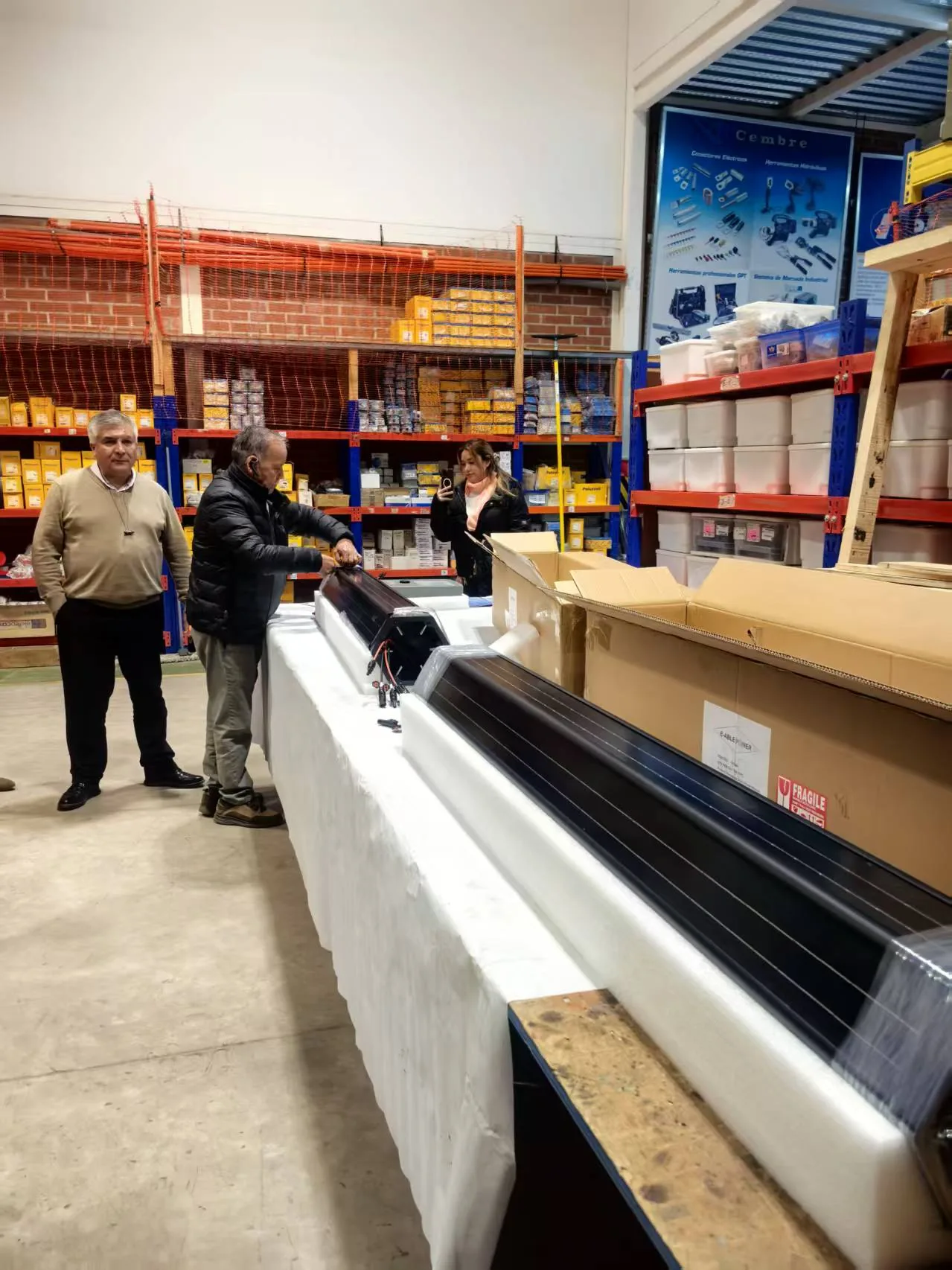
Why vertical cylindrical modules
Most solar lighting on the market uses flat panels tilted toward the sun. SolarWrap takes the opposite approach: the cells are wrapped around a cylindrical or polygonal pole, so the module collects light from every direction through the day. That geometry brings three practical benefits for markets like Chile:
- Low wind drag. A round, low-profile form sheds wind instead of catching it, which matters on coastal roads and exposed high ground. See our wind-resistance engineering note.
- 360° light capture. No single orientation is critical, so installers spend less time on site surveys and re-aiming.
- Self-cleaning in the vertical. Rain and gravity help carry dust and debris off the surface - useful in dry, dusty regions. Our installation guide covers maintenance.
If you are weighing the two approaches, our article on traditional flat panels versus vertical panels compares them side by side.
From module to pole light
SolarWrap is a module platform, not a single product. Depending on the project, the same cylindrical technology is available in several geometries, and it can be supplied on its own or integrated into a finished solar pole light:
- Circular vertical solar tube modules - the classic cylindrical wrap.
- Hexagon vertical solar modules - a faceted profile for a different look and stiffness.
- Square vertical solar modules - a boxier form for architectural schemes.
- GeoFlex foldable vertical solar modules - folding modules for transport and retrofit.
- SolarWrap vertical cylindrical solar street light - the module integrated into a street-light pole.
- ZEUS vertical solar pole light 200W - a finished cylindrical garden and pole light.
What this means for Chile projects
For distributors and EPCs working across Chile - from municipal road lighting to remote mining and telecom sites - the combination of high irradiance and a rugged vertical form factor is a strong fit. Because the modules tolerate salt air, dust and wind, they reduce the maintenance burden on sites that are expensive to reach. E-Able Power supports partners with selection advice, DIALux photometric studies and OEM/ODM configuration.
Training partners on site, not just shipping boxes, is how a product range actually gets installed correctly. That is the point of visits like this one.
Explore the SolarWrap range
Start with the Solar Wrap street light category or the SolarWrap vertical solar panels overview, then browse the full solar lighting catalogue. For project support, DIALux files or OEM/ODM enquiries, contact our team.