E-ABLE POWER

Liquid-Cooled C&I BESS

Liquid-cooled C&I storage cabinets from 100kWh to 261kWh, balancing power density, thermal control and protection. Integrated cooling keeps cells stable during high-rate cycling.

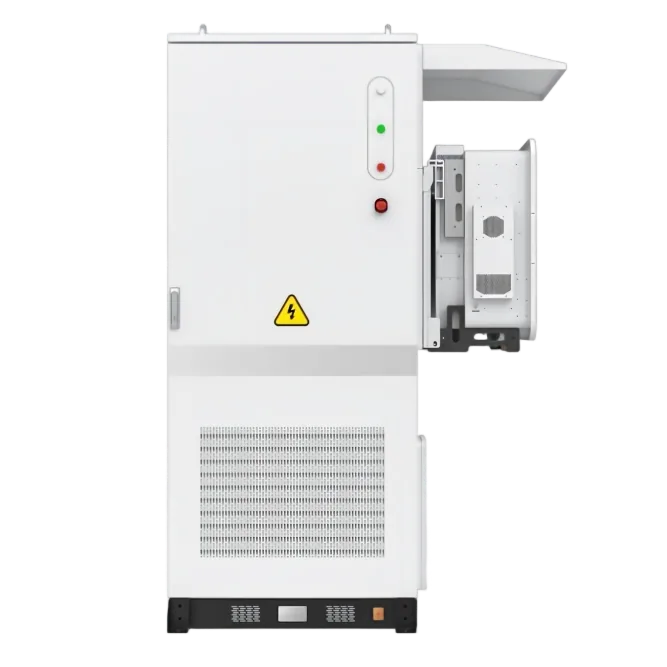
GCB-E261 Liquid-Cooled C&I Cabinet

C&I BESS CABINET

GCB-E261 Liquid-Cooled C&I Cabinet

The specified cooling method is liquid cooling, using an ethylene glycol aqueous solution at 50%:50% for consistent cell temperature across the pack…

READ PRODUCT BRIEF +

The specified cooling method is liquid cooling, using an ethylene glycol aqueous solution at 50%:50% for consistent cell temperature across the pack and…

Liquid cooling, in plain terms.

A liquid-cooled cabinet moves heat through a closed loop of ethylene glycol aqueous solution at 50:50, rather than by pushing room air across the cells. The practical difference is not the radiator: it is that every pack in the string sits closer to the same temperature, so the weakest pack does not set the pace for the whole cabinet.

That difference shows up in the cycle rating. The GCB-E261 liquid-cooled cabinet is rated 8,000 cycles at 90% depth of discharge with end-of-life at 70% of original capacity. The GCB-E241 air-cooled cabinet on the same 125 kW platform is rated 6,000 cycles at the same depth of discharge. Same power class, different thermal path, different service life on paper.

Liquid cooling also means the cabinet is a sealed unit. There is no filter to change and no outside air to keep clean, which matters on sites with dust, salt air or seasonal pollen.

What is inside the cabinet.

The GCB-E261 is built from 314 Ah prismatic LFP cells in a 1P260S configuration, grouped into 166.4 V / 314 Ah packs. Nominal battery voltage is 832 V, with an operating window of 728–936 V. Standard continuous current is 157 A in both directions, at a rated 125 kW and 261 kWh.

  • Enclosure: 970 × 1420 × 2320 mm, approximately 3 t, IP54.
  • Cell chemistry: LFP 314 Ah, the same cell format used across the GCB range.
  • Fire protection: aerosol suppression with heat and smoke detection.
  • Cooling loop: liquid cooling with a 50:50 ethylene glycol aqueous solution.
  • Operating envelope: −20 to 50 °C, relative humidity up to 95%, altitude below 2,000 m.

Those five lines are the ones worth copying into a tender document. Everything else on this page explains how to use them.

Sizing: what 125 kW and 261 kWh actually buy.

Two numbers decide most commercial projects: the power the site can draw, and the energy it needs to keep drawing when the grid or the PV is not there.

At 261 kWh nameplate and a 90% depth of discharge, roughly 235 kWh is usable per cabinet. That covers two hours at full 125 kW discharge in theory, but the discharge curve and the inverter setpoint decide the real figure — treat 235 kWh as a ceiling, not a promise.

The more useful way to size is to work backwards from the load. A 60 kW average load for four hours is 240 kWh, which lands inside a single cabinet. A 100 kW load for three hours is 300 kWh, which does not: that is two cabinets, or a shorter autonomy with a generator or PV covering the shortfall. Step the arithmetic before stepping the equipment, because the second cabinet costs far more than a frank conversation about autonomy.

What to send us for a proposal.

A 15-minute load profile beats a paragraph of description. The five inputs below are enough for us to return a sizing proposal within two to three business days.

  1. Load curve or the key peaks: kW at each period, including start-up surges.
  2. Daily energy in kWh, and the target autonomy in hours.
  3. Site conditions: ambient range, altitude, coastal exposure, indoor or outdoor position.
  4. Grid connection: voltage, phases, frequency, and whether export is allowed.
  5. Compliance documents the project needs, stated up front rather than after the order.

Questions buyers ask before signing.

Liquid-cooled or air-cooled?

Choose liquid when the site runs hot, when the cabinet sits in direct sun, or when the project is sized for a long service life. Choose air when ambient stays moderate and the budget is the binding constraint. Both are 125 kW platforms in IP54 enclosures.

Can it stand outdoors?

IP54 and an aerosol suppression system are the baseline. The cabinet still needs a level base, drainage, and clearance for service access. Coastal sites need the corrosion review that any outdoor steel enclosure needs.

What happens above 2,000 m?

The datasheet envelope stops at 2,000 m. Above that, derating has to be calculated rather than assumed, so tell us the altitude at the enquiry stage.

How does it integrate with the site controller?

Integration is defined per project, and we confirm the protocol and point list against the controller in use before shipping rather than after installation.

Battery: what liquid cooling is actually for

Cooling is not a comfort feature — it is what holds the cells in their rated band while cycling hard.

A liquid-cooled cabinet circulates coolant through cold plates under the modules, so heat is removed where it is generated rather than blown across the enclosure. That keeps the cell-to-cell temperature difference small, which is the number that actually affects cycle life — a pack with a 5 °C spread ages faster than one with a 2 °C spread, even at the same average temperature.

The practical consequence is a cabinet that can hold near-full charge and discharge rates in high ambient conditions, where air-cooled units have to derate. If the site is temperate and the cycling is gentle, that capability is being paid for and not used.

The maintenance trade is real: coolant, pumps and filters are additional service items. Ask for the service interval and the failure mode of the pump before choosing liquid over air.

Model line-up: air-cooled or liquid-cooled?

The same cabinet platform is offered in two cooling designs. Air-cooled units cover the majority of peak-shaving and backup duties; the liquid-cooled 261 kWh cabinet is the one to pick when the site runs high-rate cycles, sits in high ambient temperature, or has to keep cell temperature tightly controlled. Ratings below are the published figures for each model — EAP-CI-50, EAP-CI-112, EAP-CI-241, EAP-CI-261 and EAP-CI-261P.

ModelPower / capacityCoolingEnclosureTypical duty
EAP-CI-5050 kW / 50 kWhAirIP54Short-duration peak shaving at small sites
EAP-CI-11250 kW / 112.53 kWhAirIP54Same 50 kW, roughly double the runtime
EAP-CI-241125 kW / 241.15 kWhAirIP54Parallel several cabinets up to MW scale
EAP-CI-261125 kW / 261 kWhLiquidIP54High-rate cycling and hot, dusty sites
EAP-CI-261P125 kW / 261 kWhAirIP54Integrated inverter variant of the 261

Air-cooled cabinets: EAP-CI-50, EAP-CI-112, EAP-CI-241 and EAP-CI-261P. Liquid-cooled: EAP-CI-261, which circulates a 50:50 ethylene-glycol aqueous solution. All five are IP54 enclosures with integrated fire protection. Battery, PCS, BMS and EMS arrive inside the cabinet.

Selection questions before you specify

Air-cooled or liquid-cooled?

Air cooling is simpler and cheaper to install, and it covers peak shaving, backup and solar self-consumption at normal ambient temperatures. Liquid cooling earns its cost when the duty cycle is heavy or continuous, when the site runs hot, or when cell temperature has to stay in a narrow band to protect cycle life. If you are unsure, send the load profile and site temperature range — that decides it faster than any table.

How far can one site scale?

A single 125 kW cabinet is one building block. Cabinets parallel to reach MW scale; above that, the container line (EAP-CT-1200 at 1.2 MWh and EAP-CT-2400 at 2.4 MWh) takes over. The practical limit is usually the site transformer and the available footprint, not the cabinet itself.

What decides the capacity, kW or kWh?

Two different numbers. kW sets how much power the site can pull or push at any instant; kWh sets how long it can do it. A 50 kW site that needs four hours of backup needs roughly 200 kWh, which means parallel cabinets rather than a bigger single unit. Send us the peak load and the hours required, and the cabinet count follows.

Buyer FAQ

What is the minimum order quantity?

It depends on the model and how far the specification is from a standard configuration. Send the project quantity and destination and we confirm MOQ in the quotation rather than quoting a catalogue figure that may not apply to your case.

What lead time should we plan for?

Standard cabinets are quoted with production time stated per order, and the clock only starts once the technical configuration and the payment terms are both agreed. We will not quote a lead time before the configuration is fixed.

Which certifications come with the shipment?

LFP cells and packs are supplied with IEC 62619 and UN38.3 test documentation; cabinets carry CE and RoHS marking; manufacturing is under ISO 9001 and ISO 14001. Where a project needs grid-code or fire-safety documentation, tell us the standard and we confirm what can be supplied before quotation.

What does the five-year warranty cover?

The warranty document states the covered components, the capacity-retention threshold and who pays freight on a claim. Ask for the document with the offer, not after the order.

Can the cabinet be customised for our site?

Enclosure colour, labelling, cable entry positions and protection scheme can be adapted within the certified design. Structural changes to the enclosure or the battery configuration require re-documentation and are quoted separately.

Plan your project.

Send your requirements for a technical proposal within 2–3 business days.

New to commercial storage? Read the C&I BESS sizing guide for the five numbers that decide the cabinet.