
"6,000 cycles" is printed on every serious solar battery datasheet — but what does it actually mean for your project's 10-year plan? Many buyers compare batteries purely on upfront price, ignoring the number that drives lifetime cost: cycle life . This guide decodes the 6,000+ cycle rating on LiFePO4 batteries — how it is measured, what it means in years, and why Grade A cells change the math.
What a "Cycle" Is (and Isn't)
A cycle is one full discharge of the battery's rated capacity, followed by a full charge. Key details from E-Able Power's rating conditions:
Test temperature: 25°C
C-rate: 0.5C charge / 0.5C discharge
Depth of discharge (DoD): 80% — meaning the battery is cycled between 20% and 100% state of charge
End-of-life threshold: the rating counts cycles until the battery retains 80% of original capacity
So "6,000 cycles" reads as: after 6,000 full 80%-DoD discharge cycles, the battery still holds at least 80% of its original capacity.
Converting Cycles to Years of Service
Translate cycles into a calendar lifespan using your daily cycling pattern:
By comparison, a typical lead-acid battery reaches end of life in 300–500 cycles — roughly 1–2 years in daily cycling. This is the core reason LiFePO4 has become the default chemistry for solar street lights and commercial storage.
Why Grade A Cells Matter
The "6,000+" figure is only achievable with Grade A prismatic cells . E-Able Power systems use 280Ah/314Ah Grade A cells (EVE-sourced) with:
Cell-level BMS monitoring — voltage, temperature, and current tracked per cell
Thermal stability above 270°C — inherently safer than NMC chemistries
Zero-maintenance chemistry — no water, no electrolyte, no equalization
User-replaceable packs — a single battery swap extends total system life beyond 15 years
Lower-grade (B/C-grade) cells degrade faster and age unevenly, dragging real cycle life far below the datasheet figure. Grade A is not a marketing term — it is the difference between a 16-year system and a 4-year disappointment.
How to Make Your Battery Last Longer
Right-size the system — avoid deep cycling daily; a slightly larger battery spends most nights at shallow DoD and lasts far longer.
Respect the temperature range — keep packs within -20°C to +60°C; BMS thermal management handles extremes.
Use the manufacturer's BMS settings — charge/discharge limits are factory-optimized; don't override without engineering review.
Shallow cycles count less — a battery cycled to 50% DoD accumulates wear slower per day than one cycled to 100%.
Frequently Asked Questions
Q: Does the 5-year warranty mean the battery only lasts 5 years?
No — the 5-year warranty covers manufacturing defects. With 6,000+ cycle chemistry, the battery typically outlives the warranty by 2–3× in daily cycling, and the user-replaceable pack design extends the whole system beyond 15 years.
Q: Is LiFePO4 safe for street-side installation?
Yes. LFP chemistry is thermally stable above 270°C, contains no cobalt, and with cell-level BMS monitoring it is the dominant choice for outdoor solar and C&I storage worldwide.
Q: What battery options do you offer?
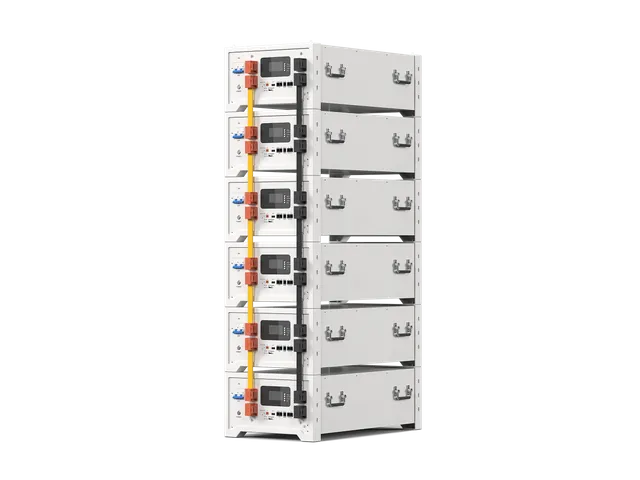
For solar lighting and storage projects we supply the GLR-314 stackable modules, GHR-314 battery racks, and integrated systems like the GCB-E100 — all Grade A LiFePO4.
Specify the Right Battery the First Time
E-Able Power engineers match battery chemistry, capacity, and cycling profile to your exact application — solar street light, C&I peak shaving, or backup. Factory-direct pricing, CE/RoHS compliance, 5-year warranty, and a free sizing proposal within 2–3 business days.
Request a battery sizing proposal: sales@e-ablepower.com · WhatsApp +86 153-5558-9600
Have a solar or storage project?
Send your site conditions for a system engineered to your location — system sizing and pricing within 2–3 business days.