
An on/off-grid hybrid inverter is the control point between DC solar power, battery storage and AC home circuits. The connection diagram is useful because it shows the system as a whole: energy sources, storage, loads and monitoring must be considered together.
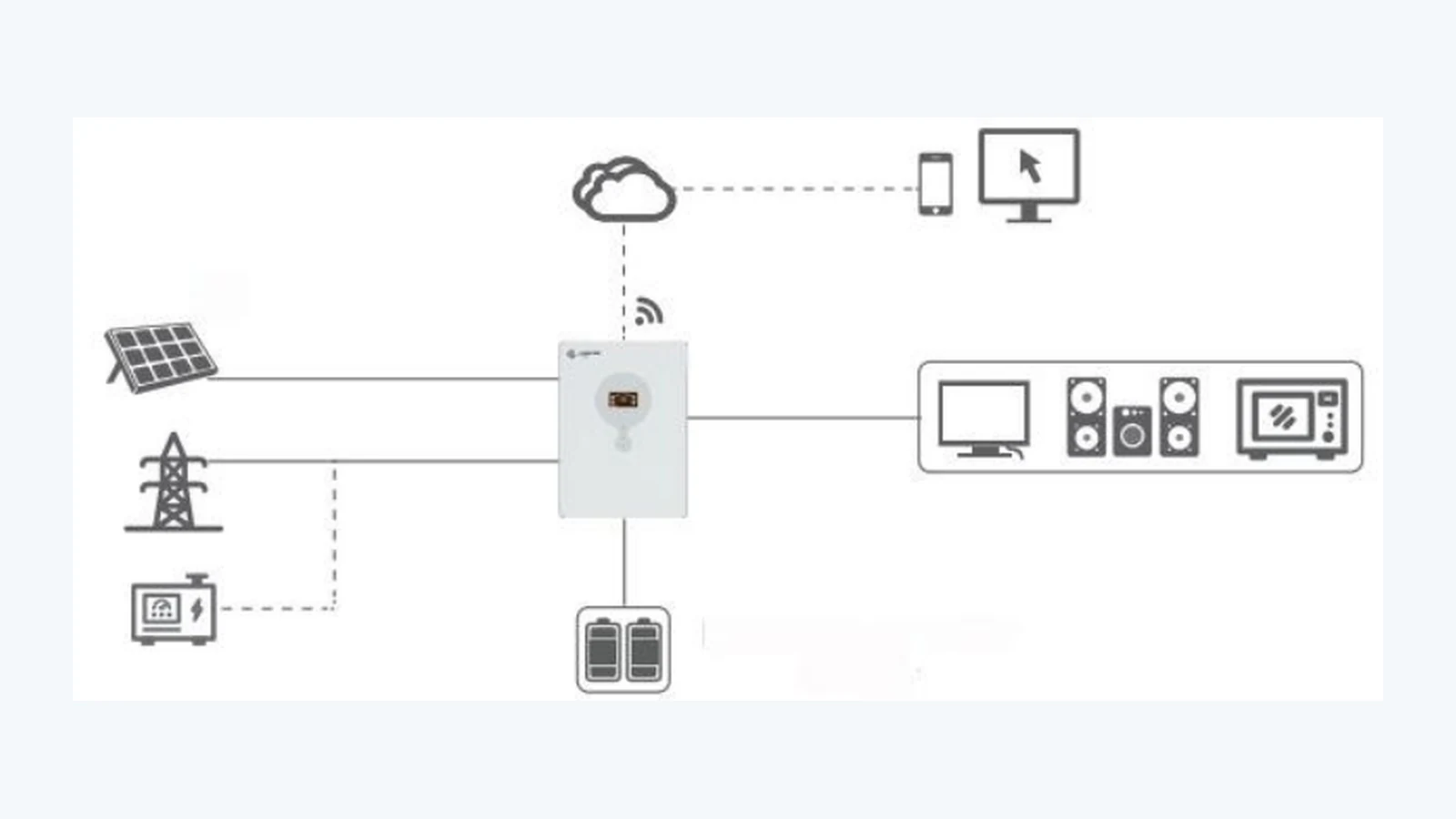
The core connections in a hybrid inverter system
The supplied diagram places the inverter between the PV array, grid connection, optional generator, battery and household loads. It also shows cloud and app/web monitoring. This is a conceptual architecture rather than a substitute for an approved electrical drawing. Cable sizing, breakers, isolation, earthing and local safety requirements are determined by the exact equipment and installation site.
Solar, grid, generator, battery and home loads
Solar panels
PV strings supply DC energy to the inverter. For the supplied 7.2kW and 12kW split models, the data sheet lists a 500V maximum PV input voltage and a 90–450Vdc MPPT range. The array must be designed within these limits across expected temperature conditions. The two MPPT trackers allow the designer to evaluate separate PV input groups where appropriate.
Battery storage
The battery connection lets solar energy be stored for later use and supports backup operation when a suitable system has been designed. The data sheet lists a 40–58.6Vdc battery range and lithium-ion or lead-acid battery compatibility. For lithium systems, the battery BMS, charge/discharge limits and protection arrangement must be checked with the battery documentation.
Grid and generator inputs
The diagram includes both grid and generator connections. These sources are not interchangeable in a project design: transfer behavior, breaker coordination and permitted operating modes should be set by the installer. The supplied split data sheet notes that a grid connection function is available but that no certification has been obtained, so an installation must not be represented as approved for utility interconnection without separate evidence.
Home loads and monitoring
Home loads are served through the planned distribution arrangement. The buyer should identify which circuits need continuity during an outage and which can remain outside the backup scope. The data sheet lists WiFi monitoring and communications including USB, RS485, WiFi, GPRS and dry-node control for the split models; final monitoring availability depends on the exact configuration.
What changes between on-grid and backup operation
In normal operation, the system may coordinate PV, battery and available AC input according to the configuration. During an outage or off-grid event, the supported circuits, battery state and inverter capacity determine what can remain energized. The documentation lists 7.2kW and 12kW split-phase models, as well as an off-grid peak-power figure of 1.5 times rated power for 10 seconds. Use these values for early design discussion, then have the installer validate the complete load schedule.
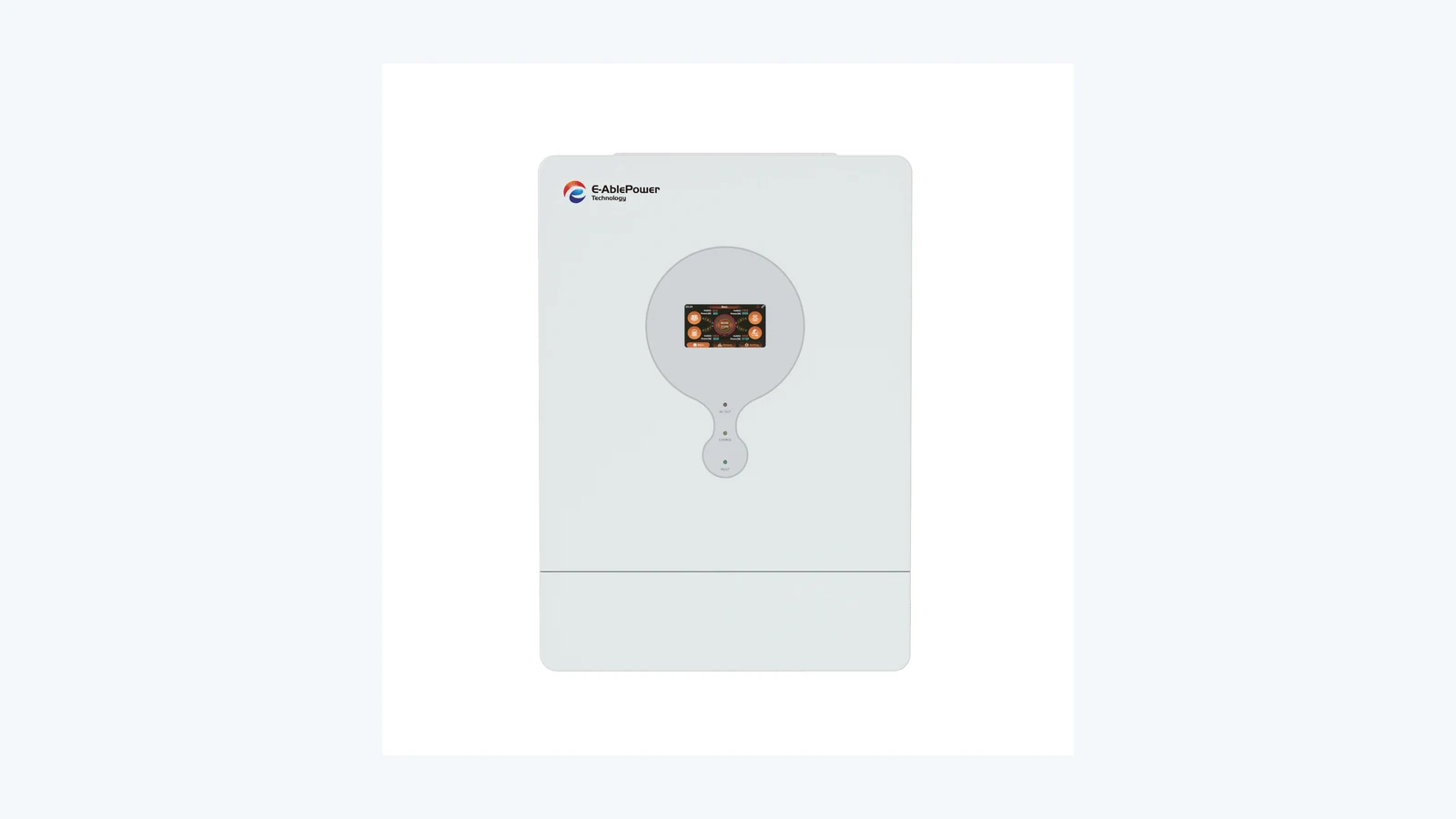
Installation checks for 120/240V residential systems
- Confirm the required 120V and 240V load circuits and their maximum simultaneous demand.
- Check PV string voltage, MPPT range and input-current limits against the selected model.
- Confirm the battery voltage range, BMS communication and DC protection plan.
- Define whether a generator is required and how it will be isolated and controlled.
- Verify local permits, electrical codes and utility requirements before grid connection.
Discuss your hybrid inverter configuration
Review E-Able Power’s IP-Plus 12kW-P inverter page and off-grid hybrid inverter range, then send the project load profile and system objective for technical support.
REQUEST PROJECT SUPPORT →